
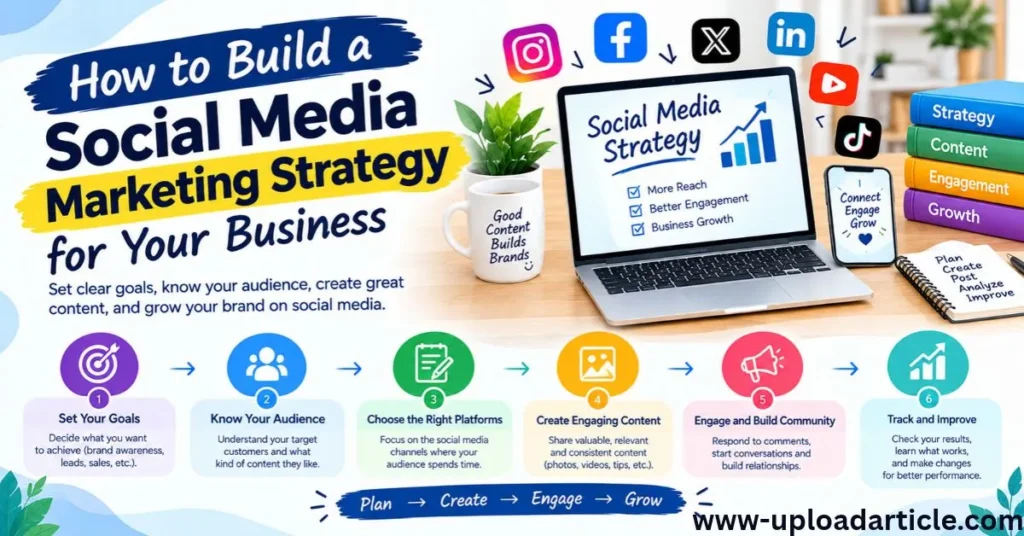
Social media has become an important communication channel for businesses of all sizes. Companies use platforms such as Facebook, Instagram, LinkedIn, TikTok, and YouTube to share information, connect with customers, demonstrate products, and build brand awareness.
However, simply creating accounts and posting occasionally does not guarantee results. Businesses need a clear social media marketing strategy that connects their activities with specific goals.
A well-planned strategy helps you identify your audience, select suitable platforms, publish relevant content, manage your time, and measure performance. This guide explains how to build a practical strategy that supports your business objectives.
What Is a Social Media Marketing Strategy?
A social media marketing strategy is a plan that defines how a business will use social platforms to reach its audience and achieve marketing goals.
It typically includes:
- Business objectives and measurable targets.
- Target audience research.
- Platform selection.
- Content themes and formats.
- Publishing frequency.
- Community engagement.
- Advertising plans, where appropriate.
- Performance measurement.
For example, a local service business might use Facebook and Instagram to share customer education content and service updates. A business targeting professional clients might prioritize LinkedIn instead.
The right strategy depends on your audience, resources, industry, and goals.
Why Does Your Business Need a Social Media Strategy?
It Builds Brand Awareness
Consistent, relevant content can help people become familiar with your business, its services, and the problems it solves.
It Helps You Reach the Right Audience
Each platform attracts different audiences and supports different content formats. A strategy helps you concentrate on the channels most relevant to your potential customers.
It Supports Customer Relationships
Responding to questions, addressing concerns, and sharing helpful information can create stronger relationships with existing and potential customers.
It Improves Marketing Efficiency
Planning content in advance reduces last-minute work and makes it easier to reuse ideas across appropriate channels.
It Helps You Measure Results
A defined strategy allows you to compare performance against specific goals instead of relying on likes or follower counts alone.
Step 1: Set Clear Social Media Marketing Goals
Start by deciding what you want social media to accomplish.
Common goals include:
- Increasing brand awareness.
- Driving relevant traffic to your website.
- Generating qualified leads.
- Encouraging product or service inquiries.
- Improving customer engagement.
- Supporting online sales.
- Providing customer support.
Choose goals that are relevant to your business. For example, an online store may focus on qualified website visits and purchases, while a consultancy may prioritize inquiries from potential clients.
Make your targets measurable and time-bound. You might aim to increase qualified website visits from social media over the next three months.
Record your starting performance so you can assess progress later.
Step 2: Understand Your Target Audience
Before selecting platforms or designing posts, determine who you want to reach.
Consider these questions:
- What problems do your potential customers face?
- What information are they looking for?
- Which platforms do they use?
- What content formats do they prefer?
- What questions do they ask before purchasing?
- What concerns might prevent them from choosing your service?
You can gather information through customer conversations, feedback forms, website analytics, social media insights, and industry research.
Avoid making assumptions based solely on age or location. Audience needs, interests, and purchasing behavior are also important.
For example, a company selling business software may need educational demonstrations and case studies, whereas a fashion business may benefit more from product photography and short styling videos.
Step 3: Choose the Right Social Media Platforms
You do not need to use every social platform. Begin with the channels that best match your audience and the content you can produce consistently.
Facebook can support community engagement, local business promotion, events, customer communication, and paid advertising.
Instagram is useful for visual storytelling, product demonstrations, Reels, Stories, and brand-building content.
LinkedIn is particularly relevant for professional networking, business-to-business marketing, industry insights, and professional services.
TikTok
TikTok can be useful for short-form videos, demonstrations, educational content, and creative storytelling where your target audience is active.
YouTube
YouTube supports tutorials, product demonstrations, reviews, educational videos, and longer-form content that people may discover through search.
Select one or two platforms initially. Expand only when you understand what works and have enough resources to maintain additional channels.
Step 4: Research Your Competitors
Competitor research can reveal useful content ideas and audience expectations.
Review several businesses serving a similar audience. Examine:
- Which platforms they use.
- What types of content they publish.
- Which posts attract meaningful engagement.
- How they respond to comments.
- What questions their audiences ask.
- Which topics appear to be missing from their content.
Do not copy another business’s posts, visuals, or brand identity. Instead, identify opportunities to provide clearer explanations, more useful demonstrations, original insights, or better customer support.
Competitor engagement can provide clues, but it does not reveal the full business results behind an account.
Step 5: Develop Your Content Pillars
Content pillars are broad themes that organize your social media publishing.
For example, a digital marketing company might use these pillars:
Educational content: Explain SEO, content marketing, analytics, and digital advertising.
Practical tips: Share short instructions, checklists, and common mistakes to avoid.
Industry insights: Discuss relevant developments and explain what they mean for your audience.
Service information: Explain what your business offers, who it helps, and how your process works.
Community content: Ask thoughtful questions, answer audience concerns, and encourage relevant discussions.
Choose a manageable number of themes. Each should serve a clear audience need and connect naturally with your business.
Step 6: Create a Practical Content Calendar
A content calendar helps you plan what to publish and when.
Your calendar can include:
- Publication date.
- Platform.
- Post topic.
- Content format.
- Caption or draft.
- Visual asset.
- Call to action.
- Status.
- Performance notes.
A simple weekly schedule might look like this:
| Day | Content idea | Goal |
|---|---|---|
| Monday | Educational tip | Provide value |
| Tuesday | Short tutorial | Encourage learning |
| Wednesday | Industry insight | Build awareness |
| Thursday | Frequently asked question | Address concerns |
| Friday | Service explanation | Generate inquiries |
This is only an example. Adjust the frequency and format to your audience and available resources.
Publishing fewer useful posts consistently is generally more sustainable than posting frequently without a clear purpose.
Step 7: Create Engaging Social Media Content
Effective content should be relevant, understandable, and appropriate for the platform.
Write Clear Captions
Start with a useful opening line that communicates the topic or problem. Explain the main point clearly and include a relevant next step when appropriate.
Avoid exaggerated claims or misleading statements designed only to attract clicks.
Use High-Quality Visuals
Choose images, graphics, and videos that support the message. Use readable text, suitable contrast, and consistent branding.
Make sure you have the necessary rights to use the visual assets you publish.
Provide Practical Value
Content can be valuable when it answers a question, explains a process, compares options fairly, or helps the audience make a better decision.
Adapt Content to Each Platform
A detailed LinkedIn post may need a shorter version for Instagram. A blog tutorial could become a short video, infographic, or series of tips.
Repurposing saves time, but each version should fit the platform rather than being copied everywhere without adjustment.
Step 8: Use Calls to Action Effectively
A call to action tells people what they can do next.
Examples include:
- Read the complete guide on your website.
- Save this checklist for later.
- Ask a question in the comments.
- Explore the available services.
- Subscribe to the newsletter.
- Contact the business for more information.
Choose a call to action that matches the post’s purpose. Educational content may encourage readers to explore a related guide, while a service post may invite relevant inquiries.
Not every post needs a sales message. Constant promotion can make an account less useful to its audience.
Step 9: Engage With Your Audience
Social media is a two-way communication channel. Publishing content is only one part of building an active presence.
Set aside time to:
- Respond to genuine questions.
- Acknowledge relevant comments.
- Address complaints professionally.
- Participate in appropriate discussions.
- Identify repeated customer questions.
- Use feedback to improve future content.
Do not purchase fake followers or artificial engagement. These tactics can distort performance data and fail to create meaningful relationships with potential customers.
For customer complaints involving personal information, move the conversation to an appropriate private support channel when necessary.
Step 10: Consider Paid Social Media Advertising
Organic content can support long-term engagement, while paid advertising may help businesses reach specific audiences or promote selected offers.
Before launching an advertising campaign, define:
- The campaign objective.
- The intended audience.
- The offer or message.
- The budget and duration.
- The landing page or destination.
- The performance metrics.
Start with a manageable budget and review results before increasing spending.
Track meaningful outcomes, such as qualified leads or purchases, rather than evaluating campaigns only by impressions and likes.
Advertising costs and available targeting options vary by platform and campaign.
Step 11: Measure Social Media Performance
The most useful metrics depend on your goals.
| Goal | Useful metrics |
|---|---|
| Brand awareness | Reach and impressions |
| Audience engagement | Comments, shares, saves, and meaningful interactions |
| Website traffic | Link clicks and relevant website visits |
| Lead generation | Qualified inquiries and form submissions |
| Sales | Purchases and attributable revenue |
| Customer support | Response time and issue resolution |
Use platform analytics and website analytics tools where appropriate.
Review performance over a meaningful period. A post with fewer likes may still generate valuable website visits or inquiries, so avoid judging every piece of content by the same metric.
Common Social Media Marketing Mistakes
Posting Without a Clear Goal
Every post does not need to generate a sale, but your overall content plan should support a defined objective.
Using Too Many Platforms
Managing several accounts without adequate resources can lead to inconsistent publishing and slow responses.
Ignoring Comments and Messages
Failing to respond to genuine questions can undermine the customer experience.
Copying Competitors
Your content should reflect your own expertise, audience, and business identity.
Focusing Only on Followers
Follower growth does not automatically mean more qualified traffic, leads, or sales.
Expecting Immediate Results
Building awareness and trust often requires sustained effort, experimentation, and improvement.
Conclusion
A successful social media marketing strategy starts with clear goals and a strong understanding of your audience. Select suitable platforms, develop useful content themes, plan publications, engage with your community, and measure outcomes that matter to your business.
You do not need to be active everywhere at once. Begin with a manageable plan, learn from your results, and improve your approach consistently. Over time, a focused strategy can help you build stronger relationships and make social media a more effective part of your marketing efforts.
FAQs
What is a social media marketing strategy?
It is a plan for using social platforms to achieve business goals through audience research, content planning, engagement, promotion, and performance measurement.
Which social media platform is best for business?
The best platform depends on your audience, industry, goals, and content format. Choose based on where your potential customers are active rather than popularity alone.
How often should a business post on social media?
There is no universal posting frequency. Choose a schedule that allows you to maintain quality, respond to your audience, and evaluate performance.
Is social media marketing free?
Creating an account and publishing organic content can be free, but businesses may incur costs for content production, management tools, staff time, and advertising.
How long does social media marketing take to produce results?
Results vary by business, audience, competition, content quality, and budget. Review performance regularly and adjust your strategy based on evidence.