
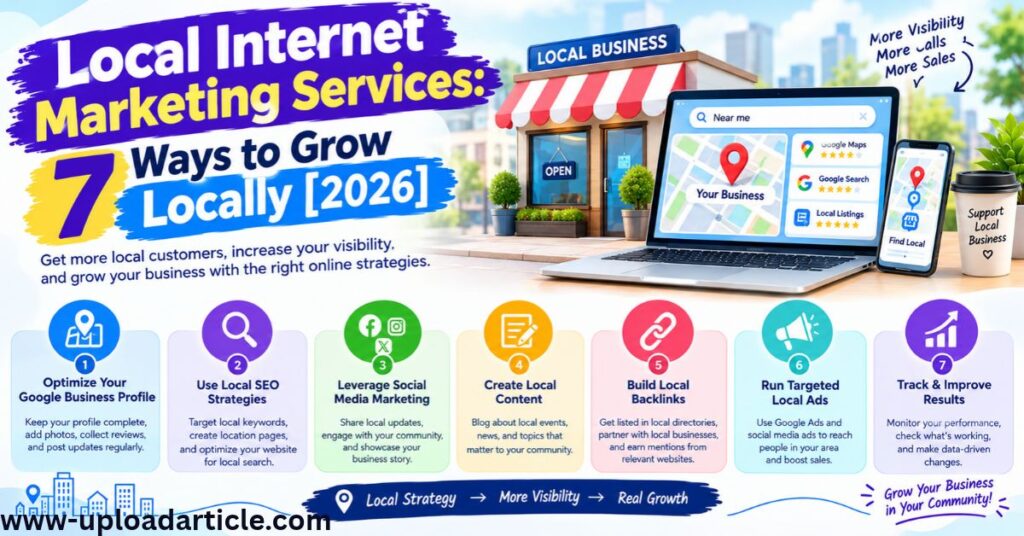
Running a local business is challenging when potential customers cannot find you online. Whether you own a restaurant, plumbing company, dental clinic, retail store, law firm, salon, or home improvement business, your customers often search the internet before deciding which company to contact. They may look for nearby providers, compare reviews, visit business websites, check prices, or search for services available in their area. If your business does not appear when people search for what you offer, you could miss valuable opportunities to connect with customers who are already interested in your services.
This is where local internet marketing services can make a difference. These services help businesses improve their online presence, reach relevant local audiences, generate inquiries, and encourage more customers to take action. From local search engine optimization and Google Business Profile optimization to paid advertising, social media marketing, and website improvements, the right strategy connects your business with people who are most likely to become customers.
However, successful local marketing involves more than publishing occasional social media posts or adding a city name to your website. It requires understanding customer behavior, choosing suitable marketing channels, providing accurate business information, building trust, and measuring performance. In this guide, you will discover seven important local internet marketing services, how they work, what to consider when choosing a provider, and how to build a practical strategy for long-term business growth.
What Are Local Internet Marketing Services?
Local internet marketing services are digital marketing solutions designed to help businesses reach potential customers in a specific geographic area. That area might be a city, town, neighborhood, group of nearby communities, or a service region covered by a business. Instead of focusing exclusively on a broad national or international audience, local marketing concentrates on people who are more likely to visit a physical location or purchase services within a defined area.
These services can include local SEO, Google Business Profile management, website optimization, local keyword research, online reputation management, paid search advertising, social media campaigns, content marketing, and conversion tracking. A provider may offer a complete marketing package or specialize in one particular service, depending on the needs and budget of the business.
For example, a plumbing company serving Dallas may want to appear when nearby homeowners search for emergency plumbing services. A local marketing strategy could improve its website, optimize its Google Business Profile, create useful service-area pages, encourage genuine customer reviews, and run targeted search advertisements. Each activity supports a different part of the customer journey, from discovering the business to contacting the company.
Why Local Internet Marketing Matters for Small Businesses
Local customers frequently use online searches to discover businesses, compare available options, and evaluate whether a provider is trustworthy. A strong online presence makes it easier for potential customers to understand what your business offers, where you operate, and how they can contact you. It also gives your company an opportunity to compete with larger brands by emphasizing relevant services, local knowledge, customer experience, and convenient access.
Another important advantage is the ability to focus marketing resources on a defined audience. A business that serves one city may not benefit from attracting large numbers of visitors from locations it cannot serve. Local marketing helps prioritize relevant searches, suitable geographic areas, and customers whose needs match the company’s services. This can make campaigns more efficient, although results depend on competition, demand, budget, and the quality of execution.
Local marketing also helps build trust over time. Accurate business details, helpful website content, authentic customer reviews, consistent communication, and a professional online experience can reassure potential customers. When these elements work together, they create a clearer path from online discovery to a phone call, booking, store visit, or purchase.
1. Local Search Engine Optimization (Local SEO)
Local SEO is one of the most important local internet marketing services because it helps businesses improve their visibility in geographically relevant search results. When people search for services near them or include a city or neighborhood in their queries, search engines attempt to provide relevant results. Local SEO helps search engines understand a business’s services, location, website content, and relevance to those searches.
An effective local SEO strategy typically begins with keyword research and website optimization. Businesses can identify phrases customers use when searching for their services, then incorporate those phrases naturally into relevant page titles, headings, service descriptions, and helpful content. For example, an electrician serving Austin might create a clear service page explaining residential electrical repairs in its actual service area rather than publishing repetitive pages that simply replace one city name with another.
Local SEO also involves technical website health, mobile usability, internal linking, relevant local references, and accurate business information. Depending on the business, it may include improving location pages, creating useful answers to customer questions, and earning legitimate links from relevant organizations or publications. These activities help establish relevance and credibility, but no provider can guarantee a specific Google ranking.
How Local SEO Helps Generate Customers
Local SEO can help your business reach people who are actively looking for products or services. Someone searching for a specific repair, professional service, or nearby store may already have a clear need. Appearing in relevant search results gives your business an opportunity to introduce its services at the moment that need arises.
Organic search visibility can also support long-term marketing efforts. Unlike paid advertisements, organic listings do not charge a fee for each click, although SEO requires investment in expertise, content, website maintenance, and ongoing improvements. Results often take time and vary according to competition, website history, location, and the quality of the strategy.
2. Google Business Profile Optimization
Google Business Profile is an important tool for eligible businesses that want to manage how their information appears across Google Search and Google Maps. A complete, accurate profile can help potential customers discover a business, understand its services, view photographs, read reviews, check available contact details, and find directions when appropriate.
Optimizing a profile begins with providing accurate business information. This includes the correct business name, address or service area where applicable, phone number, website, operating hours, and relevant business categories. Businesses should describe their services clearly, upload genuine photographs, keep opening hours updated, and respond professionally to customer reviews. Information should reflect the real business rather than being altered simply to target additional keywords.
For service-area businesses, it is especially important to follow Google’s eligibility and address-display guidelines. Businesses that travel to customers may have different profile requirements from businesses that receive customers at a public storefront. An experienced local marketing provider should understand these differences and avoid practices that could put a business profile at risk.
Best Practices for Google Business Profile
Regular maintenance helps keep your business information useful and trustworthy. Review your operating hours when holidays approach, update service information when your offerings change, and check that the website and phone number remain correct. Respond to reviews in a respectful manner without sharing customers’ private information, and encourage genuine feedback without purchasing reviews or offering prohibited incentives.
Businesses should also monitor available profile performance data, where provided, to understand how customers interact with their listings. Profile views and other engagement measures can be useful indicators, but they should be considered alongside phone inquiries, website visits, bookings, and actual sales. A profile is most valuable when it supports a consistent and reliable customer experience.
3. Local Website Optimization
Your website is often one of the first places potential customers visit after discovering your business online. Even if your company appears in search results, visitors may leave if the website is slow, confusing, outdated, difficult to use on mobile devices, or missing essential information. Local website optimization improves the experience so visitors can quickly understand your services and decide what to do next.
A well-optimized website should explain what the business offers, which customers it serves, where it operates, and how visitors can get in touch. Important information may include service descriptions, pricing guidance where appropriate, business hours, contact details, testimonials, frequently asked questions, and clear calls to action. Each major service should have a useful page that answers genuine customer questions instead of relying on one vague page to cover every offering.
Mobile usability deserves particular attention because many customers search while traveling, comparing nearby businesses, or dealing with an immediate need. Buttons should be easy to tap, phone numbers should be accessible, forms should be straightforward, and important information should not be hidden behind confusing navigation. A clear website can support more calls and inquiries, although conversion improvements should be measured rather than assumed.
Create Helpful Local Service Pages
Service pages can explain the specific problems your business solves and the areas it genuinely serves. For example, a home cleaning company could provide separate, detailed pages for deep cleaning, move-out cleaning, and recurring residential cleaning if these are distinct services it actually offers. Each page should provide useful information about the service, the process, customer expectations, and how to request an estimate.
Businesses serving multiple locations should avoid publishing dozens of nearly identical pages with only the city name changed. Instead, create location pages when there is meaningful information to share about service availability, local customer needs, projects, or coverage. The goal is to help visitors make informed decisions while giving search engines clear and accurate information about the business.
4. Local Keyword Research and Content Marketing
Keyword research helps businesses understand how potential customers describe their needs online. Some searchers use broad terms such as “roofing company,” while others use more specific phrases such as “roof repair in Phoenix” or “emergency roof inspection near me.” Understanding these differences allows a business to create pages and campaigns that match the intent behind relevant searches.
A local keyword strategy should consider services, locations, customer problems, and different stages of the buying journey. Someone searching for the cost of a service may be researching options, while someone looking for an emergency provider may be ready to make contact. Matching content to these different needs can improve relevance and create a more useful website experience.
Content marketing supports this process by answering questions and explaining topics that matter to potential customers. A local accountant might publish a guide explaining the documents small businesses should prepare before tax season. A landscaping company could explain how to choose suitable plants for the local climate. A dental clinic might describe common dental procedures and what patients should discuss with their dentist. Useful content can build trust and create additional ways for potential customers to discover the business.
Build a Content Strategy Around Customer Needs
Start by collecting questions your customers regularly ask. These may concern prices, service availability, preparation, maintenance, common problems, comparisons, or the expected process. Turn those questions into useful website articles, service-page sections, or frequently asked questions, ensuring that information is accurate and appropriate for the industry.
A strong content strategy prioritizes usefulness rather than publishing as many pages as possible. Articles should contain clear explanations, relevant examples, helpful formatting, and links to related services where appropriate. Track which pages attract relevant visitors and whether those visitors contact the business. This approach helps businesses improve content based on actual performance instead of relying only on traffic numbers.
5. Local Pay-Per-Click Advertising
Pay-per-click advertising allows businesses to display paid advertisements across platforms such as Google Ads and pay according to the campaign’s bidding model, commonly per click for standard search campaigns. It can be useful when a business wants to promote a specific service, reach a selected geographic area, or generate inquiries while its organic visibility develops.
Local advertising campaigns can target relevant search terms and eligible geographic areas, with settings adjusted according to the business’s service coverage. For example, a locksmith operating in a particular city might advertise emergency services in areas it can realistically reach. A local tutoring center may focus campaigns on nearby families searching for specific subjects or exam preparation.
Successful advertising requires more than choosing a daily budget. Campaigns need relevant keywords, appropriate targeting, compelling advertisements, useful landing pages, accurate conversion tracking, and ongoing optimization. Businesses should also monitor irrelevant clicks, search terms, lead quality, and the cost of acquiring a customer. If the campaign generates many visits but few meaningful inquiries, the issue could involve targeting, the offer, the landing page, or the service’s competitiveness.
How to Evaluate Paid Advertising Results
Before launching a campaign, determine what counts as a valuable result. Depending on the business, this may be a completed booking, a qualified phone call, a submitted inquiry, or a purchase. Track these actions where technically and legally appropriate, and distinguish meaningful leads from low-quality submissions or accidental clicks.
Calculate the cost of acquiring a lead and, when possible, the cost of acquiring an actual customer. A campaign with cheaper clicks is not necessarily better if those visitors rarely become customers. Similarly, a campaign with higher click costs may be profitable when it consistently generates valuable business. The right decision depends on conversion rates, margins, customer lifetime value, and the reliability of measurement.
6. Social Media Marketing for Local Businesses
Social media marketing can help local businesses build recognition, communicate with customers, showcase their work, and maintain relationships with their communities. Platforms such as Facebook, Instagram, LinkedIn, and TikTok may be useful depending on the audience, industry, and type of content a business can produce consistently.
For example, a restaurant may share its menu, food photographs, special events, and customer updates. A local contractor could publish project photographs, explain its work process, and answer common homeowner questions. A professional service provider may share educational posts that help potential customers understand important decisions before booking a consultation.
Social media works best when the content is relevant and authentic. Businesses should not rely exclusively on promotional posts asking people to buy. Educational content, behind-the-scenes updates, genuine customer stories shared with permission, staff introductions, and answers to common questions can create a more engaging presence. Paid social advertising can complement organic content when a business wants to reach a defined audience or promote a particular offer.
Choose Social Platforms Strategically
Businesses do not need to maintain an active presence on every platform. The better approach is to identify where the target audience spends time and which channels suit the business’s content and objectives. A visually focused business may benefit from image and video platforms, while a business-to-business service provider may find professional networks and educational content more relevant.
Set realistic publishing goals and measure the outcomes that matter. Reach, engagement, website visits, inquiries, and booked appointments can each provide useful information, but their importance depends on the campaign’s purpose. Consistent communication and helpful content are generally more sustainable than posting frequently without a clear objective.
7. Online Reputation Management and Customer Reviews
Online reviews can influence how potential customers evaluate local businesses. People often compare ratings, read recent feedback, and look for evidence that a company provides reliable service. A strong reputation can help build confidence, while unanswered complaints or inconsistent business information may raise questions that prevent customers from making contact.
Online reputation management includes monitoring reviews, responding professionally, identifying recurring customer concerns, and maintaining accurate business information across relevant platforms. Businesses should encourage customers to share honest feedback through appropriate methods and should never fabricate reviews, purchase fake ratings, or pressure customers to provide only positive comments.
Responding to negative feedback is an opportunity to demonstrate professionalism. A useful response acknowledges the concern, avoids disclosing private information, and explains how the customer can continue the conversation through an appropriate channel. When complaints reveal a genuine service problem, businesses should address the underlying issue rather than focusing only on the public response.
Turn Customer Feedback Into Better Service
Reviews and direct feedback can reveal recurring problems that may not be obvious to business owners. Customers might repeatedly mention confusing booking procedures, slow responses, unclear pricing, or difficulty finding information. These patterns can help a business prioritize improvements to its website, communication, staff training, or service delivery.
Review management should be part of a broader customer experience strategy. Accurate information, dependable service, transparent expectations, and respectful communication are the foundations of a credible reputation. Marketing can communicate these strengths, but it cannot sustainably replace the actual customer experience.
How to Choose the Right Local Internet Marketing Agency
Choosing a local internet marketing agency requires evaluating its expertise, approach, communication, reporting, and understanding of your business. Some agencies offer comprehensive services, while others focus on SEO, paid advertising, website development, or social media. The right choice depends on the company’s current challenges, budget, competition, and growth objectives.
Start by identifying what you need help with. If potential customers cannot find your website in organic search, local SEO may deserve attention. If your website attracts visitors but produces few inquiries, conversion improvements may be more important. If you need to test demand quickly for a particular service, a carefully managed paid campaign might be appropriate. A good provider should explain its recommendations in the context of your goals instead of selling every service to every business.
Ask prospective agencies about their experience with similar businesses, how they measure success, what work is included in their fees, and how they communicate progress. Request examples of their process and reporting, but evaluate case studies carefully because results from one business or location may not be replicated elsewhere. Be cautious of anyone guaranteeing first-page rankings, promising immediate results without evidence, or recommending manipulative link-building and fake-review practices.
Questions to Ask Before Hiring a Provider
Before signing a contract, clarify the scope of work, pricing, expected deliverables, reporting frequency, contract duration, and ownership of accounts and website assets. You should understand who will make changes to your website, who controls advertising accounts, and whether you can retain access if the relationship ends.
It is also worth asking how the provider handles tracking, privacy, and changes in marketing performance. A credible agency should be willing to explain its methods in understandable language and discuss both successes and setbacks. Transparency matters because local marketing is an ongoing process that requires informed decisions, realistic expectations, and cooperation between the business and its marketing partner.
How Much Do Local Internet Marketing Services Cost?
The cost of local internet marketing services varies according to the provider, location, competition, scope of work, and marketing channels involved. A small business that needs basic website improvements and profile management will usually have different requirements from a multi-location company running SEO, content production, paid advertising, and conversion optimization simultaneously.
Some providers charge a monthly retainer, while others offer project-based pricing, hourly consulting, or campaign management fees. Advertising spend may be charged separately from the agency’s management fee. Website development, professional photography, content production, software, and other services may also create additional expenses.
Rather than choosing a provider solely because it offers the lowest price, evaluate the expected work and how it relates to your business objectives. Ask for a clear breakdown of services, deliverables, reporting, and any additional costs. A sensible budget should reflect what your business can afford, the value of a new customer, the level of competition, and the time required to evaluate results.
How to Measure the Success of Local Internet Marketing
Measuring results helps businesses understand whether their marketing investment is contributing to meaningful outcomes. Website traffic can indicate visibility, but it does not automatically translate into revenue. A more complete evaluation looks at the customer journey, from the first search or advertisement to the inquiry, booking, purchase, or repeat transaction.
Useful performance indicators may include organic search impressions, relevant website visits, Google Business Profile interactions, qualified phone calls, form submissions, booked appointments, conversion rate, cost per lead, customer acquisition cost, and revenue. Not every business needs to monitor every metric. Select measurements that reflect your goals and ensure that tracking is configured correctly before drawing conclusions.
Review performance over an appropriate period and account for factors such as seasonality, changes in demand, promotions, competition, and website updates. If results are weaker than expected, investigate where potential customers leave the process. Low visibility may require SEO or advertising improvements, while a high number of visitors but few inquiries may indicate problems with the offer, landing page, pricing, trust signals, or user experience.
Common Local Internet Marketing Mistakes to Avoid
One frequent mistake is targeting locations that a business does not genuinely serve. This can attract irrelevant traffic, confuse customers, and create inaccurate expectations. Marketing should reflect the actual service area and the company’s ability to deliver what it promises.
Another mistake is treating SEO as a collection of keywords rather than a way to provide relevant information. Repeating the same city name unnaturally, creating thin duplicate location pages, or publishing articles that do not answer customer questions can weaken the overall quality of a website. A more sustainable strategy focuses on useful pages, clear business information, and a positive user experience.
Businesses may also neglect mobile usability, ignore customer reviews, run advertising without conversion tracking, or judge success entirely by social media engagement. These issues make it harder to identify which activities produce valuable results. Establish clear goals, maintain accurate information, measure performance, and improve the customer experience before increasing spending simply to generate more traffic.
A Practical Local Internet Marketing Plan for Small Businesses
Businesses do not need to implement every marketing service at once. A practical plan begins with the essentials and expands as the business learns what works. Start by checking that your website clearly explains your services, service area, contact details, and next steps. Review your Google Business Profile if eligible, correct inaccurate information, and ensure that your business presents itself consistently across relevant online platforms.
Next, research the searches your customers use and identify the most important service pages to improve. Make sure each page provides helpful information, addresses common questions, and gives visitors an easy way to contact you. Set up suitable analytics and conversion tracking so you can distinguish ordinary website activity from valuable inquiries and sales.
After addressing these foundations, consider additional channels based on your objectives and budget. You might publish helpful local content, test a focused paid search campaign, develop a consistent social media plan, or improve the process for requesting genuine customer feedback. Review the results regularly, keep what produces value, and revise activities that fail to support your goals. This measured approach can help small businesses build a stronger online presence without spreading their resources too thin.
Conclusion
Local internet marketing services help businesses improve their visibility, connect with nearby customers, and create a clearer path from online discovery to real business inquiries. Local SEO, Google Business Profile optimization, website improvements, keyword research, paid advertising, social media marketing, and reputation management each serve a different purpose within a broader marketing strategy.
The best approach is not necessarily to use every available service. It is to identify your business’s most important needs, understand how your customers search, choose suitable channels, and measure whether your efforts produce qualified leads and sales. A well-maintained website, accurate business information, helpful content, genuine customer feedback, and consistent performance measurement provide a practical foundation for sustainable growth.
If you are evaluating local internet marketing services for your business, start with clear objectives and a realistic budget. Choose providers who explain their recommendations, avoid guaranteed-ranking promises, and focus on measurable business outcomes. With consistent effort and ongoing improvements, your business can build a more useful online presence and become easier for relevant local customers to discover.
FAQs
What are local internet marketing services?
Local internet marketing services help businesses reach potential customers in specific geographic areas. They may include local SEO, Google Business Profile optimization, website improvements, local advertising, content marketing, social media, and reputation management.
Which local internet marketing service should I start with?
Start by identifying your biggest problem. If customers struggle to find your business online, local SEO and business profile optimization may be useful starting points. If your website already attracts relevant visitors but generates few inquiries, focus on website usability, conversion tracking, and improving the customer journey.
Are local internet marketing services worth it for small businesses?
They can be worthwhile when the services match the business’s audience, goals, budget, and service area. Results should be evaluated using relevant measures such as qualified leads, customer acquisition cost, bookings, and sales rather than website traffic alone.
How long does local internet marketing take to work?
The timeline depends on the service. Paid advertising can begin generating visibility soon after a campaign launches, although profitable results are not guaranteed. SEO and organic content generally require ongoing work and may take months to produce meaningful improvements, depending on competition, website condition, and other factors.
Can local internet marketing help my business appear on Google Maps?
Eligible businesses may improve their chances of appearing in relevant local results by maintaining an accurate Google Business Profile, providing useful website information, earning genuine reviews, and building overall local relevance. However, no agency can guarantee a particular Google Maps position.
How do I know if a local marketing agency is trustworthy?
Look for transparent pricing, clear deliverables, realistic expectations, understandable reporting, and a willingness to explain its methods. Avoid providers that guarantee specific rankings, sell fake reviews, or use manipulative tactics that could put your online presence at risk.
Do local businesses need a website if they have social media?
A website provides a dedicated place to explain services, publish detailed information, collect inquiries, and measure customer actions. Social media can complement a website, but relying on a third-party platform alone gives a business less control over its online presence and customer experience.
Suggested internal linking: Link this article to related content on local SEO, digital marketing services, SEO services, content marketing, and Google Business Profile optimization wherever those pages exist on your website. Use descriptive anchor text that fits the surrounding sentence naturally rather than forcing exact-match keywords into every link.