
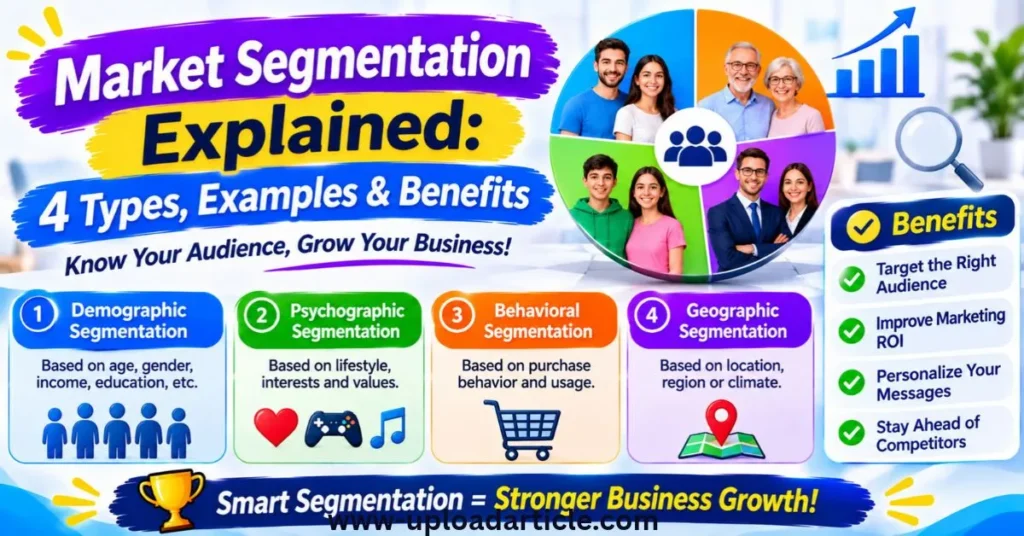
Understanding customers is one of the most important parts of building a successful business. However, not every customer has the same needs, interests, budget, lifestyle, or purchasing habits. A marketing message that attracts one group of people may have little impact on another. This is why businesses use market segmentation to organize their potential customers into smaller groups with similar characteristics.
Market segmentation helps companies understand who their customers are, what they want, and how they make purchasing decisions. Instead of promoting the same product to everyone, businesses can develop more relevant marketing strategies for different customer groups. This can improve customer experiences, make advertising more effective, and help organizations use their marketing budgets more efficiently.
Whether you run a small business, manage a marketing agency, operate an online store, or study business management, understanding market segmentation can help you make better marketing decisions. In this guide, Market Segmentation Explained, explore its four main types, provide practical examples, and discuss how businesses can develop an effective segmentation strategy.
What Is Market Segmentation?
Market segmentation is the process of dividing a broad market into smaller groups of customers who share similar characteristics, needs, interests, or purchasing behaviours. These groups are known as market segments. Businesses use this process to understand different audiences and create products, services, prices, and promotional strategies that better match their requirements.
For example, a clothing company may sell products to teenagers, young professionals, parents, and older adults. Although all these groups may be interested in clothing, their preferences can be very different. Teenagers might prefer fashionable and affordable outfits, while working professionals may prioritize comfort, quality, and formal designs.
Instead of using one marketing message for every customer, the company can create separate campaigns for each group. This makes its communication more relevant and gives customers information that better matches their interests.
Market segmentation is not limited to large companies. Small businesses can also use it to identify their most valuable customers, understand local demand, and compete more effectively. Even a small online store can divide its audience based on age, location, shopping habits, or product preferences.
Why Is Market Segmentation Important?
Market segmentation is important because it helps businesses move away from general marketing and focus on customers who are more likely to be interested in their products or services. Without understanding different customer groups, companies may spend money promoting products to people who have little interest in buying them.
One major advantage is improved customer understanding. When businesses study the characteristics and behaviour of different segments, they can identify what customers value most. This information can influence product development, pricing, customer support, and promotional campaigns.
Another benefit is more relevant marketing communication. Customers are more likely to respond to messages that address their actual needs. For example, a company selling skincare products may create separate campaigns for customers interested in moisturizing, anti-aging products, or sensitive-skin solutions.
Market segmentation can also help businesses identify new opportunities. Research may reveal an underserved group whose needs are not being addressed by existing competitors. A company can use this information to develop a suitable product or service.
It also supports better resource allocation. Rather than distributing the marketing budget equally across every possible audience, businesses can prioritize segments that offer stronger commercial opportunities.
What Are the Four Main Types of Market Segmentation?
There are four traditional types of market segmentation: demographic, geographic, psychographic, and behavioural segmentation. Each approach examines customers from a different perspective, helping businesses understand who they are, where they live, what they value, and how they behave.
1. Demographic Market Segmentation
Demographic segmentation divides customers according to measurable population characteristics. It is one of the most commonly used approaches because demographic information can help businesses identify broad customer groups.
Common demographic factors include:
- Age
- Gender
- Income
- Education level
- Occupation
- Family size
- Marital status
- Household characteristics
For example, a company selling educational products may target university students, parents, and working professionals. Each group may have different purchasing priorities and expectations.
A luxury car manufacturer may focus on customers with higher purchasing power, while an affordable clothing brand may target students and young adults who are more price-conscious.
Demographic segmentation is useful because it provides a starting point for understanding an audience. However, people with similar demographic characteristics do not always have identical interests or buying behaviour. Businesses should combine demographic information with other segmentation methods when possible.
2. Geographic Market Segmentation
Geographic segmentation divides a market according to the physical locations of customers. Businesses use this method when customer needs, preferences, or purchasing opportunities vary by location.
Common geographic factors include:
- Country
- State or province
- City
- Region
- Neighbourhood
- Urban or rural location
- Climate
- Population density
For example, a clothing retailer may promote winter jackets in colder regions and lightweight clothing in warmer areas. A restaurant may focus its marketing on people living or working within a particular delivery area.
Geographic segmentation is particularly valuable for local businesses. A plumber, electrician, restaurant, or home renovation company usually needs to reach customers within specific service locations rather than advertise to an entire country.
International companies can also use geographic segmentation to adapt their products and marketing messages for different markets. Language, local customs, weather, purchasing power, and cultural preferences may all influence buying decisions.
3. Psychographic Market Segmentation
Psychographic segmentation divides customers according to their psychological characteristics, interests, values, lifestyles, attitudes, and personalities.
Unlike demographic segmentation, which focuses on measurable personal characteristics, psychographic segmentation explores why people may prefer particular products or services.
Common psychographic factors include:
- Lifestyle
- Personal values
- Interests
- Hobbies
- Attitudes
- Personality
- Social preferences
- Motivations
For example, a fitness brand may target people who value healthy living, regular exercise, and active lifestyles. An environmentally focused company may appeal to customers who prioritize sustainability and responsible consumption.
Two people may have the same age, income, and location but completely different lifestyles. One may prefer outdoor activities and adventure travel, while the other may enjoy technology, reading, and home entertainment.
Psychographic segmentation helps businesses create more meaningful brand messages. However, companies should collect and use customer information responsibly, particularly when dealing with sensitive personal characteristics.
4. Behavioural Market Segmentation
Behavioural segmentation divides customers according to their actions, purchasing habits, product usage, brand interactions, and responses to marketing activities.
It focuses on how customers behave rather than simply describing who they are.
Common behavioural factors include:
- Purchasing frequency
- Brand loyalty
- Product usage
- Spending habits
- Purchase readiness
- Benefits sought
- Occasion-based purchases
- Website interactions
For example, an online store may identify customers who purchase every month, customers who buy only during sales, and visitors who add products to their carts but do not complete checkout.
Each group may need a different marketing approach. Regular customers could receive loyalty rewards, while customers who abandon their shopping carts might receive a helpful reminder or a suitable offer.
Behavioural segmentation is especially useful in eCommerce, subscription businesses, mobile applications, and digital marketing because companies can analyze customer interactions and identify patterns.
Businesses should ensure that behavioural data is collected transparently and handled in accordance with applicable privacy requirements.
Market Segmentation Examples
Understanding market segmentation becomes easier when we examine how different businesses apply it in real situations. The following examples demonstrate how companies can divide their audiences and develop relevant marketing strategies.
Market Segmentation Example for a Clothing Brand
Imagine a clothing company selling casual, formal, and sportswear products. Its potential customers include students, office workers, parents, and fitness enthusiasts.
The company could use demographic segmentation to identify customers by age and income. Geographic segmentation could help it promote seasonal collections according to regional weather.
Psychographic segmentation might identify customers who prefer sustainable fashion or premium designs. Behavioural segmentation could separate frequent buyers from occasional shoppers.
Based on this information, the business could develop separate campaigns for affordable student clothing, professional outfits, sportswear, and environmentally conscious fashion.
Market Segmentation Example for a Restaurant
A restaurant may serve families, office workers, students, and tourists. These groups may have different expectations regarding price, food choices, convenience, and dining experiences.
Geographic segmentation could help the restaurant focus on nearby residential areas and business districts. Demographic segmentation might help it understand the needs of families and students.
Behavioural segmentation could identify customers who order lunch regularly or prefer weekend dining. Psychographic segmentation could help the restaurant reach people interested in healthy meals, vegetarian food, or premium dining experiences.
The restaurant can use these insights to create suitable menus, offers, and promotional messages.
Market Segmentation Example for an Online Store
An eCommerce business can divide its customers according to browsing behaviour, previous purchases, location, and product preferences.
For instance, customers who regularly purchase electronics may receive recommendations for related accessories. First-time visitors may see introductory offers, while returning customers may receive loyalty rewards.
The business can also use geographic information to estimate delivery availability and provide relevant shipping information.
This approach helps the store create a more relevant shopping experience instead of showing every visitor exactly the same products and advertisements.
Market Segmentation Example for a Digital Marketing Agency
A digital marketing agency may serve local businesses, startups, eCommerce companies, and established organizations.
Each group may require different services. Startups might need website development and brand awareness, while eCommerce businesses may prioritize product page SEO, conversion optimization, and paid advertising.
The agency can use demographic and firmographic information to understand business characteristics, geographic segmentation to identify service markets, and behavioural information to understand customer enquiries and purchasing decisions.
It can then create separate service pages, case studies, and campaigns for each audience.
Other Market Segmentation Approaches
Although demographic, geographic, psychographic, and behavioural segmentation are the four traditional categories, businesses can use additional approaches depending on their industry and marketing objectives.
Firmographic Segmentation
Firmographic segmentation is commonly used in business-to-business marketing. It divides organizations according to characteristics such as company size, industry, annual revenue, number of employees, location, and business structure.
For example, a software provider may target small businesses with affordable subscription plans while offering advanced solutions to large enterprises.
This method helps B2B companies understand organizational differences and develop suitable sales strategies.
Technographic Segmentation
Technographic segmentation groups customers or organizations according to their technology usage. Businesses may examine the software, devices, platforms, operating systems, and digital tools used by potential customers.
For example, a company selling website development services may identify businesses using outdated content management systems and develop campaigns explaining the advantages of upgrading.
Needs-Based Segmentation
Needs-based segmentation divides customers according to the specific problems they want to solve or benefits they expect from a product.
For example, customers purchasing a smartphone may prioritize camera quality, battery life, gaming performance, affordability, or security.
Understanding these differences allows manufacturers and retailers to communicate product benefits more effectively.
How Does Market Segmentation Work?
Market segmentation involves research, customer analysis, group identification, and strategic planning. Businesses should follow a structured process to ensure that their selected segments represent genuine customer needs and useful business opportunities.
Step 1: Define Your Market
Start by identifying the market in which your business operates. Consider the products or services you offer, the problems they solve, and the types of customers who may need them.
For example, a company selling project management software may focus on startups, marketing agencies, remote teams, and established organizations.
A clear market definition prevents businesses from trying to target everyone without understanding their actual audience.
Step 2: Collect Customer Information
Gather relevant information about existing and potential customers. Useful sources may include customer surveys, website analytics, sales records, product reviews, interviews, and market research.
For online businesses, website interactions can help identify popular products, frequently visited pages, and common customer questions.
The information collected should be relevant to the marketing purpose and handled responsibly.
Step 3: Identify Shared Characteristics
Analyze the information to identify patterns among customers. Look for similarities in age groups, location, lifestyle, interests, purchasing frequency, and product preferences.
For example, research may reveal that a large portion of your customers are small business owners who need affordable marketing solutions.
These patterns can help you develop meaningful customer segments.
Step 4: Create Customer Segments
Organize customers into groups based on the characteristics that matter most to your business.
An online clothing store might create segments for budget-conscious shoppers, premium fashion buyers, sportswear customers, and people interested in sustainable products.
The segments should be sufficiently distinct to support different marketing decisions.
Step 5: Evaluate Each Segment
Not every customer segment represents a worthwhile opportunity. Businesses should examine the size, potential profitability, accessibility, competition, and long-term value of each group.
A segment may have a large audience but intense competition. Another may be smaller but more likely to purchase specialized products.
The best opportunity depends on the company’s resources and business objectives.
Step 6: Select Your Target Market
After evaluating the segments, decide which groups the business wants to serve.
Some companies focus on one specific segment, while others target multiple groups with separate products or marketing campaigns.
The selection should reflect the company’s capabilities, budget, product positioning, and growth strategy.
Step 7: Develop a Marketing Strategy
Create suitable messages, offers, products, and communication channels for each selected segment.
For example, a business targeting young professionals may use social media and digital content, while a B2B software company may prioritize professional networks, webinars, email campaigns, and industry-specific resources.
Monitor the results and adjust the strategy as customer preferences change.
What Are the Benefits of Market Segmentation?
Market segmentation provides several advantages that can support business growth, marketing performance, and customer satisfaction.
Better Understanding of Customers
Segmentation helps companies identify differences between customer groups. This knowledge can improve product decisions, customer support, pricing, and marketing communication.
More Effective Marketing Campaigns
Businesses can develop messages that address the interests and needs of specific audiences. Relevant communication can make advertising more useful and improve the likelihood of customer engagement.
Improved Customer Experience
When customers receive suitable products, recommendations, and information, their experience may become more convenient and relevant.
Better Use of Marketing Budgets
Companies can prioritize audiences that offer stronger opportunities instead of spending the same amount on every possible customer group.
Increased Customer Retention
Businesses can use segmentation to understand existing customers and develop appropriate loyalty programs, personalized communication, and retention campaigns.
Identification of New Opportunities
Customer research may reveal unmet needs or underserved groups. Companies can use these findings to develop new products, services, or market strategies.
Stronger Competitive Positioning
Understanding specific customer segments can help businesses differentiate their products and communicate their value more clearly than competitors.
What Are the Disadvantages of Market Segmentation?
Although market segmentation offers important benefits, it also has limitations that businesses should understand before implementing a strategy.
Research Can Be Expensive
Collecting and analyzing customer information may require surveys, analytics tools, research specialists, and additional resources. Smaller businesses may need to begin with simple methods.
Segments Can Change Over Time
Customer preferences, economic conditions, technology, and purchasing behaviour can change. A segment that was valuable last year may not have the same characteristics today.
Too Many Segments Can Create Complexity
Creating too many customer groups may make marketing difficult to manage. Each group could require separate messages, offers, and campaigns, increasing operational costs.
Incorrect Data Can Lead to Poor Decisions
If customer information is incomplete or inaccurate, businesses may create segments that do not represent real market behaviour.
Privacy and Ethical Concerns
Collecting customer data creates responsibilities. Companies should explain relevant data practices, protect personal information, and comply with applicable privacy laws.
A successful segmentation strategy requires accurate research, regular evaluation, and responsible information management.
Market Segmentation vs Targeting vs Positioning
Market segmentation, targeting, and positioning are connected marketing concepts, but they describe different stages of developing a marketing strategy.
Market Segmentation means dividing a broad market into smaller groups based on shared characteristics, needs, or behaviours.
Market Targeting means evaluating those groups and choosing which segments the business wants to serve.
Market Positioning means developing a clear image of the product or brand in the minds of the selected customers.
For example, a sportswear company may divide its market into professional athletes, fitness enthusiasts, casual users, and budget-conscious shoppers.
It may select fitness enthusiasts and casual users as its main target markets. It could then position its products as comfortable, stylish, and suitable for everyday exercise.
These three stages work together. Segmentation identifies potential customer groups, targeting selects the most suitable opportunities, and positioning explains why customers should choose the brand.
How Market Segmentation Supports Digital Marketing and SEO
Market segmentation is closely connected to digital marketing because online businesses can use customer insights to create more relevant content, advertisements, and website experiences.
In search engine optimization, understanding customer segments helps businesses identify the questions people ask at different stages of the buying journey.
For example, a person researching laptops may search for affordable laptops, gaming laptops, business laptops, or laptops for university students. Each query reflects a different requirement and search intent.
A business can develop separate landing pages and educational articles to address these needs. This creates a more organized website structure and helps visitors find information relevant to their interests.
In paid advertising, segmentation can help marketers organize campaigns around suitable audiences, locations, interests, or customer actions. However, targeting options must follow platform policies and applicable privacy laws.
Email marketing can also benefit from segmentation. Businesses may organize subscribers according to their preferences, previous purchases, or engagement with different topics. This allows them to send more relevant messages rather than treating every subscriber identically.
For content marketing, segmentation helps identify topics that matter to different groups. A software company might publish beginner guides for new users and advanced tutorials for experienced professionals.
The goal is to make digital experiences more useful by connecting the right information with the right audience.
How to Choose the Right Market Segmentation Strategy
Choosing the correct segmentation method depends on the type of business, available customer information, and marketing objectives.
A local restaurant may benefit most from geographic and behavioural segmentation because location and dining habits influence customer decisions.
An online fashion retailer may combine demographic, psychographic, and behavioural segmentation to understand style preferences, spending patterns, and purchasing frequency.
A B2B software provider may rely on firmographic and needs-based segmentation to identify organizations that require specific solutions.
Businesses should avoid selecting segmentation methods simply because they are popular. Instead, they should identify which customer differences have the greatest impact on product demand and purchasing decisions.
It is also useful to combine multiple approaches. For example, a fitness company may target adults in a particular city who are interested in healthy lifestyles and regularly purchase exercise products.
Combining relevant characteristics can produce more useful customer groups than relying on a single factor.
Common Market Segmentation Mistakes to Avoid
One common mistake is assuming that all customers within a demographic group have identical preferences. Age, income, and location can provide useful information, but they do not explain every purchasing decision.
Another mistake is creating segments that are too broad. A company targeting everyone interested in technology may struggle to develop relevant messages because the audience includes people with very different needs.
Some businesses also create too many segments. This can increase marketing costs and make campaigns difficult to manage. It is usually better to start with a small number of meaningful groups.
Ignoring customer research is another problem. Businesses should not rely entirely on assumptions about what people want. Surveys, customer feedback, sales information, and website analytics can provide useful evidence.
Finally, segmentation should not be treated as a permanent process. Customer behaviour changes, so businesses should review their segments and update their marketing strategies when new information becomes available.
Conclusion
Market segmentation is an essential part of understanding customers and developing effective marketing strategies. By dividing a broad market into smaller groups, businesses can identify different customer needs, improve communication, and make more informed decisions about their products and services.
The four traditional segmentation methods, demographic, geographic, psychographic, and behavioural, provide a practical foundation for analyzing different audiences. Businesses can also use firmographic, technographic, and needs-based approaches when their industries and objectives require more detailed customer research.
The most effective segmentation strategy is not necessarily the most complicated one. It is the approach that identifies meaningful customer differences and helps a business serve its audience more effectively.
Whether you are running a small company, managing an eCommerce store, working in digital marketing, or studying business management, understanding market segmentation can help you reach the right people with the right message at the right time.
FAQs
What does market segmentation mean?
Market segmentation means dividing a broad market into smaller groups of customers who share similar characteristics, needs, interests, or purchasing behaviours. Businesses use it to understand their audiences and create more relevant marketing strategies.
What are the four main types of market segmentation?
The four traditional types are demographic, geographic, psychographic, and behavioural segmentation. Each method focuses on different customer characteristics and helps businesses understand their target markets.
Why is market segmentation important in marketing?
Market segmentation helps businesses understand customers, improve marketing communication, use advertising budgets more effectively, identify new opportunities, and develop products that better match customer requirements.
What is an example of market segmentation?
A clothing company may divide customers into students, working professionals, fitness enthusiasts, and premium fashion buyers. It can then develop different products and marketing campaigns for each group.
What is demographic segmentation?
Demographic segmentation divides customers according to characteristics such as age, gender, income, occupation, education, and household size. It helps businesses identify broad groups with potentially similar requirements.
What is geographic segmentation?
Geographic segmentation divides customers according to their location, such as country, city, region, or neighbourhood. It is especially useful for local businesses and companies serving different international markets.
What is psychographic segmentation?
Psychographic segmentation groups customers according to their lifestyles, interests, values, attitudes, personalities, and motivations. It helps businesses understand why people may prefer certain products or services.