
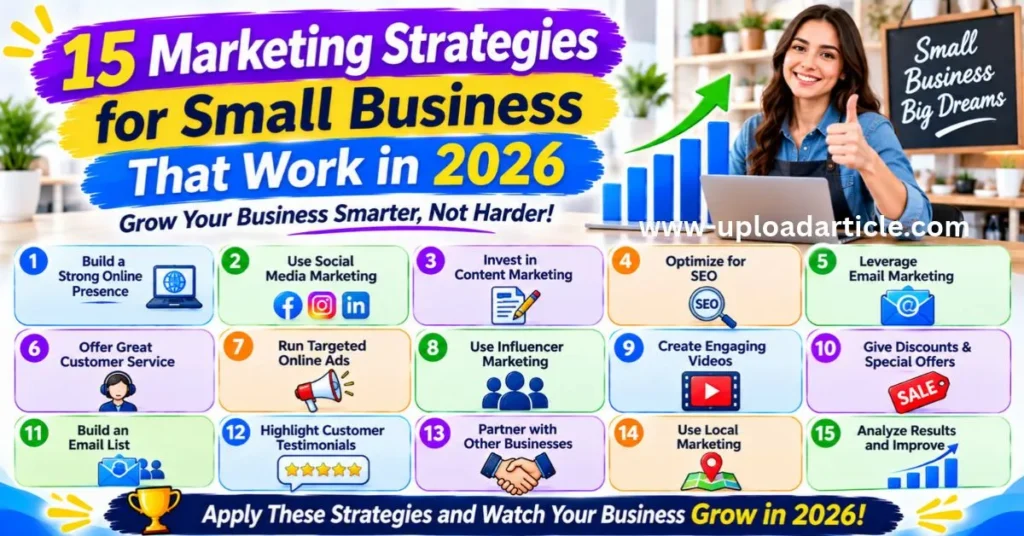
Marketing is one of the most important factors behind the success of a small business. Whether you operate a local shop, an online store, a consulting agency, a restaurant, or a service-based company, reaching the right customers is essential for generating sales and building a sustainable business. However, small businesses often face a common challenge: they have limited marketing budgets, smaller teams, and fewer resources than large companies.
The good news is that effective marketing does not always require expensive advertising campaigns. With the right approach, small businesses can attract potential customers, increase brand awareness, build trust, and compete with larger brands. Digital platforms, search engines, social media, email marketing, and customer referrals provide opportunities to reach audiences without spending a fortune.
The key is to focus on marketing activities that match your business goals and customer needs. Instead of trying every available promotional method, choose strategies that help you connect with your target audience and encourage people to take action.
This guide explores 15 practical marketing strategies for small business owners in 2026. You will learn how to promote your products and services, improve your online presence, attract local customers, and build long-term relationships with your audience.
Why Marketing Is Important for Small Businesses
Marketing helps small businesses introduce their products and services to potential customers. Even if a company offers excellent products, competitive prices, and outstanding customer service, it may struggle to grow if people do not know it exists. A well-planned marketing strategy makes it easier for customers to discover a business and understand why they should choose it.
Another important benefit is customer trust. People are more likely to purchase from businesses that provide useful information, maintain a professional online presence, share genuine customer feedback, and communicate consistently. Marketing gives small businesses opportunities to demonstrate their expertise and build credibility before customers make purchasing decisions.
Marketing also supports business growth by helping owners understand customer behaviour, identify profitable audiences, and measure which promotional activities produce results. When businesses track website visits, enquiries, leads, and sales, they can make better decisions about where to invest their time and money.
15 Effective Marketing Strategies for Small Business
Small businesses do not need to use every marketing channel at once. The most effective approach is to select strategies based on the target audience, available budget, industry, and business objectives. The following methods can help businesses attract customers and develop a stronger market presence.
1. Build a Professional Business Website
A professional website is one of the most valuable marketing assets for a small business. It gives potential customers a central place to learn about your company, explore your products or services, review contact information, and understand what makes your business different.
Your website should be easy to navigate, mobile-friendly, fast-loading, and designed around the needs of visitors. Include essential pages such as Home, About, Products or Services, Contact, and frequently asked questions. Add clear calls to action so visitors know whether to call, request a quote, make a purchase, or book an appointment.
For example, a local plumbing company can use its website to display service areas, emergency contact information, customer testimonials, and common plumbing services. A small online store can organise products into useful categories and provide clear descriptions, delivery details, and secure checkout options.
A website also gives you more control over your brand presentation than relying entirely on social media platforms. It can become the foundation for search engine optimisation, content marketing, paid advertising, and email campaigns.
2. Invest in Search Engine Optimisation (SEO)
Search engine optimisation helps small businesses improve their visibility in unpaid search results. When potential customers search for products, services, or solutions related to your business, SEO can help your website appear in relevant results.
Start by identifying keywords that your target audience uses when searching online. Focus on relevant search terms rather than choosing keywords only because they have high search volumes. For example, a small bakery in Chicago may target phrases such as “custom birthday cakes in Chicago” or “local bakery near me.”
Improve your website by writing useful page titles, descriptive meta descriptions, informative content, and clear headings. Make sure your website works properly on mobile devices and that important pages can be discovered by search engines. Publishing helpful articles that answer customer questions can also attract relevant visitors over time.
Local businesses should pay particular attention to local SEO. Keep their business name, address, phone number, opening hours, and service information accurate across relevant online platforms. SEO usually takes time, but it can become a valuable long-term source of relevant website traffic and enquiries.
3. Use Social Media Marketing
Social media marketing allows small businesses to connect with customers, introduce products, share updates, and develop brand recognition. Platforms such as Facebook, Instagram, TikTok, LinkedIn, and Pinterest offer different ways to reach audiences, depending on the industry and type of customer.
Rather than creating accounts on every platform, choose the channels your target audience actually uses. A fashion store may benefit from Instagram and TikTok because visual content helps showcase products. A business consultancy may find LinkedIn more useful for sharing professional insights and connecting with decision-makers.
Publish a consistent mix of content, including product demonstrations, educational tips, customer stories, behind-the-scenes updates, and answers to common questions. Respond to comments and messages in a timely and helpful way.
The goal should not be to collect followers without a clear purpose. Focus on building relationships, increasing meaningful engagement, and directing interested people towards your website, products, or services.
4. Create Valuable Content for Your Audience
Content marketing is an affordable way for small businesses to educate potential customers and demonstrate industry knowledge. Instead of promoting products in every message, create useful content that helps people solve problems, compare options, and make informed decisions.
You can publish blog posts, buying guides, tutorials, short videos, infographics, checklists, and frequently asked questions. For example, a small fitness equipment store could publish articles about choosing home workout equipment, maintaining exercise machines, and creating beginner-friendly workout spaces.
A good content strategy starts with customer questions. Identify what people want to know before purchasing your product or hiring your service. Then create content that answers those questions clearly and accurately.
Content marketing can also support SEO and social media marketing. A single detailed blog post can be repurposed into several social media posts, a short video, an email newsletter, or an infographic. This allows small teams to get more value from the content they create.
5. Focus on Local Marketing
Local marketing is particularly important for businesses that serve customers in a specific city, town, or neighbourhood. Restaurants, salons, repair companies, retail stores, medical practices, and home service providers can benefit from building visibility within their local communities.
Start by creating and maintaining a complete Google Business Profile if your business is eligible. Add accurate contact details, business hours, service information, photos, and updates. Encourage satisfied customers to leave honest reviews and respond professionally to feedback.
You can also participate in local events, sponsor community activities, collaborate with nearby businesses, and distribute promotional materials in relevant areas. For example, a local coffee shop could partner with a nearby bookstore to offer a joint promotion.
Local marketing works best when your message is specific to the community you serve. Highlight convenient locations, local expertise, customer service, and products or services that address the needs of nearby customers.
6. Use Email Marketing to Build Customer Relationships
Email marketing gives small businesses a direct way to communicate with people who have chosen to receive updates. It can be used to share new products, announce offers, distribute helpful information, and encourage repeat purchases.
Start by building an email list through your website, checkout process, newsletter subscription, or in-store sign-up. Make sure people understand what they are subscribing to and provide a simple way to unsubscribe.
Send useful and relevant messages rather than overwhelming subscribers with constant promotions. For example, an online clothing store might send new collection announcements, seasonal style advice, and occasional discount offers. A consulting company could share educational resources and business updates.
You can also organise subscribers into groups based on their interests, purchase history, or previous interactions. This makes it easier to send relevant messages instead of treating every customer the same way.
7. Encourage Customer Reviews and Testimonials
Online reviews can influence how potential customers evaluate a small business. People often look for feedback before choosing a restaurant, hiring a contractor, purchasing a product, or booking a service.
Make it easy for satisfied customers to share genuine feedback. You can send a polite follow-up email after a purchase, provide a review link on a receipt, or ask customers directly after a successful service experience.
Display selected testimonials on relevant website pages, but always use genuine feedback and obtain permission where appropriate. Avoid buying reviews, writing fake testimonials, or offering incentives in ways that violate platform policies.
Respond to negative reviews calmly and professionally. A helpful response that acknowledges a customer’s concern and explains how the business will address it can demonstrate accountability to future customers.
8. Offer Referral and Loyalty Programs
Existing customers can become an important source of new business. Referral marketing encourages satisfied customers to recommend your products or services to friends, relatives, and colleagues.
A small business can introduce a simple referral programme that rewards customers when a successful referral results in a purchase. Rewards might include store credit, a discount on a future order, or an additional service, depending on the business model and applicable rules.
Loyalty programmes focus on encouraging existing customers to return. For example, a coffee shop could offer a reward after a certain number of purchases, while an online store might provide points for repeat orders.
Keep these programmes simple and transparent. Customers should understand how rewards work, what conditions apply, and how they can redeem them.
9. Run Targeted Paid Advertising Campaigns
Paid advertising can help small businesses reach potential customers more quickly than relying only on organic marketing. Platforms such as Google Ads, Facebook Ads, Instagram Ads, and LinkedIn Ads provide targeting options that can help businesses reach relevant audiences.
Before launching a campaign, decide what you want to achieve. Your goal might be website traffic, phone calls, product purchases, appointment bookings, or lead generation. Build the campaign around one clear objective and send visitors to a relevant landing page.
Start with a controlled budget and test different headlines, images, audience groups, and offers. Monitor the cost per lead, conversion rate, and actual sales rather than judging success only by clicks or impressions.
Paid advertising should support a broader marketing strategy. If your website is confusing or your offer is unclear, increasing advertising spend may simply bring more visitors who do not convert.
10. Collaborate With Influencers and Local Creators
Influencer marketing is not limited to large brands or celebrities. Small businesses can work with local creators and niche influencers who have an engaged audience that matches their target customers.
For example, a small skincare brand could collaborate with a beauty creator who regularly shares skincare routines. A local restaurant might invite a food creator to experience its menu and share an honest review.
Look beyond follower counts when evaluating potential partners. Consider audience relevance, engagement quality, content style, and whether the creator’s audience is likely to be interested in your products or services.
Agree on the campaign expectations in advance, including deliverables, payment, content usage rights, disclosure requirements, and timing. A smaller creator with a relevant audience may be more useful than a much larger account with limited audience overlap.
11. Create Video Marketing Content
Video marketing helps small businesses demonstrate products, explain services, answer questions, and introduce the people behind the brand. Short-form videos can be shared on platforms such as Instagram Reels, TikTok, YouTube Shorts, and Facebook.
You do not need expensive equipment to get started. A smartphone, suitable lighting, clear audio, and a simple filming plan may be enough for many types of content.
Consider making product demonstrations, tutorials, customer experience videos, behind-the-scenes clips, and answers to frequently asked questions. A home renovation company, for example, could share short videos showing project progress and explaining common renovation mistakes.
Keep videos focused on one useful idea. Add captions where appropriate, use clear opening messages, and include a relevant next step so viewers know how to learn more or contact your business.
12. Develop Partnerships With Other Small Businesses
Partnership marketing allows businesses to reach new audiences by working with companies that serve similar customers without directly competing with them.
For example, a wedding photographer could partner with a wedding planner, florist, or event venue. A fitness studio could collaborate with a healthy meal preparation company. Both businesses can recommend each other’s services, create joint offers, or organise shared events.
The strongest partnerships provide value to both businesses and their customers. Before agreeing to collaborate, make sure the partner has a good reputation, a compatible audience, and a professional approach.
Start with a small project, such as a joint social media campaign or a shared promotional event. Review the results before committing to a longer partnership.
13. Use Discounts and Special Promotions Strategically
Special offers can encourage customers to try a new business, purchase seasonal products, or return for another order. However, discounts should support a clear business objective rather than become a permanent habit.
Small businesses can offer introductory deals, seasonal promotions, product bundles, limited-time offers, or discounts for first-time customers. A service provider might offer a reduced-price initial consultation, while an online store could create a bundle of related products.
Before launching a promotion, calculate the cost and expected profit. A campaign that increases sales but leaves the business with very little margin may not be worthwhile.
Use promotions selectively and explain the conditions clearly. The aim is to create a genuine reason for customers to take action while protecting the long-term value of your products and services.
14. Improve Customer Experience and Personalisation
Customer experience is an important part of marketing because satisfied customers are more likely to return, recommend a business, and leave positive feedback.
Small businesses often have an advantage in providing personal service. They can take time to understand individual customer needs, respond to questions, remember preferences where appropriate, and resolve problems quickly.
Use customer feedback to identify areas that need improvement. Review the purchasing process, website experience, delivery arrangements, communication, and after-sales support.
Personalisation can also improve marketing results. For example, an online store can recommend products based on previous purchases or send relevant follow-up messages. A service business can tailor proposals to the customer’s specific goals instead of sending the same generic offer to everyone.
15. Track Marketing Performance and Improve Your Strategy
Marketing becomes more effective when business owners understand which activities produce meaningful results. Tracking performance helps small businesses avoid spending money on campaigns that generate attention but fail to create enquiries or sales.
Use tools such as Google Analytics 4, Google Search Console, advertising dashboards, email marketing reports, and customer relationship management systems where appropriate.
Important metrics include:
- Website traffic: The number of people visiting your website.
- Conversion rate: The percentage of visitors who complete a desired action.
- Cost per lead: The amount spent to generate a potential customer.
- Customer acquisition cost: The average cost of gaining a new customer.
- Return on advertising spend: Revenue attributed to advertising compared with advertising costs.
- Customer retention rate: The proportion of customers who continue buying over a period.
- Email engagement: How subscribers interact with your email campaigns.
Review performance regularly and compare results with your business objectives. Keep the activities that deliver meaningful outcomes, improve those that show potential, and reconsider campaigns that consistently underperform.
Affordable Marketing Strategies for Small Businesses With Limited Budgets
Not every small business can afford a large advertising budget. Fortunately, several marketing activities can help companies build visibility while keeping costs manageable.
Start with organic search: Improve your website content, target relevant search terms, and publish helpful articles that address customer questions.
Use free social media accounts: Share useful content, communicate with customers, and demonstrate your products without immediately paying for advertising.
Optimise your local presence: Maintain accurate business information and encourage genuine customer reviews on relevant platforms.
Create content in different formats: Turn one blog post into social media updates, short videos, email content, and simple graphics.
Build an email subscriber list: Develop direct relationships with people who want to hear from your business.
Ask for referrals: Encourage satisfied customers to recommend your business to people who may need your products or services.
Network within your community: Attend relevant events, join business groups, and build relationships with other local companies.
The most important principle is consistency. A small business that regularly publishes useful content, responds to customers, and improves its online presence can build momentum without relying entirely on expensive campaigns.
How to Create a Marketing Plan for a Small Business
A marketing plan gives your business a clear direction. It helps you decide who you want to reach, what message you want to communicate, which channels you will use, and how you will measure progress.
Follow these steps to develop a practical marketing plan.
1. Define your business goals
Start with specific objectives. You may want to increase website enquiries, generate more local customers, improve online sales, introduce a new service, or increase repeat purchases. Clear goals make it easier to select suitable marketing activities.
2. Identify your target audience
Understand the people most likely to purchase your products or services. Consider their needs, interests, location, buying habits, challenges, and preferred communication channels.
3. Analyse your competitors
Study businesses that offer similar products or services. Review their websites, pricing, social media content, customer reviews, and promotional methods. Look for opportunities to differentiate your business instead of simply copying competitors.
4. Choose suitable marketing channels
Select channels based on your audience and available resources. A local service provider may prioritise local SEO and customer reviews, while an online retailer may focus on SEO, social media, email marketing, and paid advertising.
5. Set a realistic budget
Decide how much your business can afford to spend on marketing. Include advertising costs, website maintenance, content creation, software, and any external services. Begin with manageable spending and increase investment when you have evidence that a channel is producing results.
6. Create a marketing calendar
Plan when you will publish content, send newsletters, launch promotions, and review campaign performance. A simple monthly calendar can help you stay consistent.
7. Measure and improve
Track results against your original objectives. Use the information to adjust your messaging, budget, audience targeting, and marketing channels.
A marketing plan does not need to be complicated. Even a one-page document with clear goals, a defined audience, selected channels, a budget, and measurable targets can provide a useful starting point.
Common Small Business Marketing Mistakes to Avoid
Even well-intentioned marketing activities can waste time and money when they are not planned properly. Avoiding common mistakes can help small businesses use their resources more effectively.
Trying to reach everyone: A broad message often fails to connect with specific customers. Identify the audience most likely to benefit from your products or services.
Using too many marketing channels: Managing several platforms without enough time or resources can reduce content quality and consistency. Start with a few relevant channels and expand gradually.
Ignoring SEO: Businesses that depend entirely on social media may miss potential customers who search for solutions through search engines.
Posting without a clear purpose: Every marketing activity should support a goal, such as educating customers, building trust, generating leads, or increasing sales.
Ignoring customer feedback: Reviews, questions, and complaints can reveal problems with products, services, and customer experience. Use feedback to improve the business.
Failing to measure results: Without tracking performance, it becomes difficult to know whether a campaign is worth continuing.
Competing only on price: Constant discounts can reduce profit margins and make it difficult to build a strong brand. Highlight quality, convenience, service, expertise, or another meaningful advantage.
Traditional Marketing vs Digital Marketing for Small Businesses
Small businesses can use both traditional and digital marketing methods. The right combination depends on the target audience, location, product, and business objectives.
Traditional marketing includes printed flyers, brochures, direct mail, local newspaper advertising, outdoor signs, and community sponsorships. These methods can be useful for businesses that serve specific neighbourhoods or customers who respond well to local promotion.
Digital marketing includes websites, SEO, social media, email campaigns, online advertising, and content marketing. It provides opportunities to reach targeted audiences, communicate directly with customers, and measure campaign performance.
Neither approach is automatically better in every situation. A local restaurant may combine outdoor signage and community events with local SEO and social media. An online software company may rely more heavily on search visibility, educational content, email marketing, and targeted advertising.
The best strategy is the one that reaches the right customers and produces measurable business results.
How to Choose the Best Marketing Strategy for Your Small Business
The most suitable marketing strategy depends on what you sell, who you serve, and how customers make purchasing decisions.
If you operate a local business, focus on local SEO, customer reviews, community partnerships, and social media. These methods can help people in your service area discover your company.
If you run an online store, consider SEO, product content, email marketing, social media, influencer collaborations, and carefully managed advertising campaigns. Make sure your product pages provide the information customers need to make a purchase.
If you provide professional services, use educational articles, case studies, testimonials, LinkedIn, and email marketing to demonstrate expertise and build trust.
If you are launching a new business, begin by creating a professional website, defining your target audience, setting up relevant social media profiles, and collecting early customer feedback. Focus on building credibility before increasing your marketing spend.
Most importantly, do not select a strategy simply because another company uses it. Choose methods that fit your customers and business model.
Conclusion
Effective marketing strategies for small business growth do not have to involve expensive campaigns or complicated technology. A professional website, SEO, social media, content marketing, local promotion, email campaigns, customer referrals, and strong customer service can all help businesses attract and retain customers.
The most important step is to understand your target audience and select marketing channels that match their needs. Start with a manageable plan, set clear objectives, and track the results of your activities. As your business grows, you can expand into additional channels and invest more in the strategies that deliver measurable value.
Small businesses that communicate consistently, provide genuine value, and build lasting customer relationships can strengthen their market position over time. Instead of trying to do everything at once, focus on a few effective marketing strategies and improve them continuously.
FAQs
What are the best marketing strategies for small business?
Some of the most effective strategies include search engine optimisation, social media marketing, content creation, email marketing, local SEO, customer referrals, online reviews, and targeted advertising. The best combination depends on your industry, audience, budget, and business goals.
How can I market my small business with no money?
You can start by creating organic social media content, improving your website, publishing helpful blog posts, optimising your local business profile, networking with other businesses, and asking satisfied customers for referrals. These activities require time and consistency but can help build visibility without a large advertising budget.
What is the cheapest way to advertise a small business?
Organic social media, local networking, customer referrals, email marketing, and SEO can be relatively affordable options. The actual cost depends on the time, tools, and resources required to manage each activity.
Is digital marketing worth it for small businesses?
Yes. Digital marketing can help small businesses reach relevant audiences, improve online visibility, communicate with customers, and measure campaign results. Businesses should choose channels that match their audience rather than investing in every available platform.
How much should a small business spend on marketing?
There is no single marketing budget that works for every business. Spending depends on revenue, profit margins, growth objectives, competition, and available resources. Start with an affordable budget, track performance, and adjust investment according to results.
How can I attract more customers to my small business?
Improve your online presence, make your products and services easy to understand, publish useful content, collect genuine customer reviews, offer a strong customer experience, and use relevant promotional channels. Clear messaging and consistent communication can help turn potential customers into buyers.
Which social media platform is best for small businesses?
The best platform depends on the target audience and industry. Instagram and TikTok can be useful for visual products and short videos, Facebook can support community engagement and local promotion, and LinkedIn is often suitable for professional services and business-to-business marketing.