
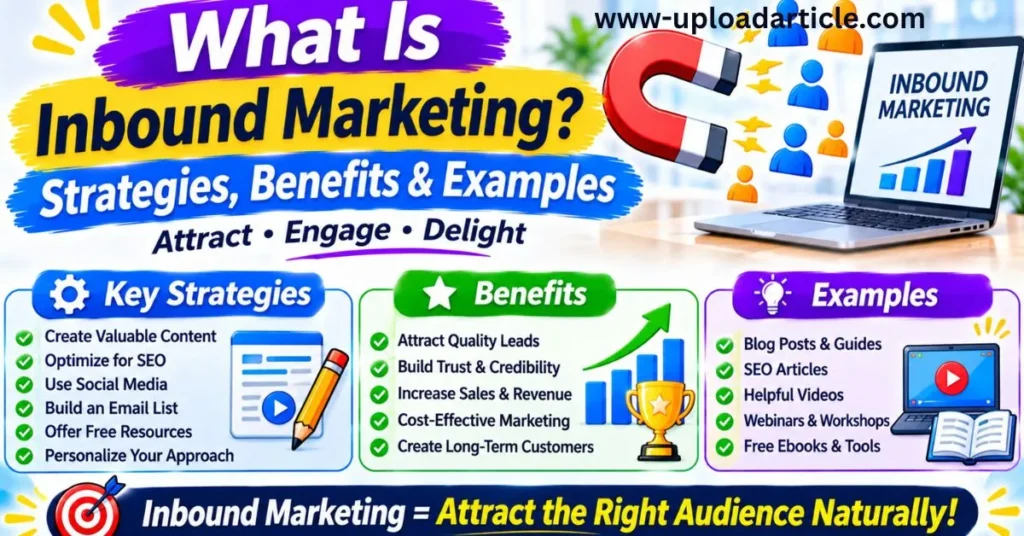
Modern customers do not always want businesses to interrupt them with advertisements, sales calls, and promotional messages. Instead, many people prefer to research products, compare services, read reviews, and explore helpful information before making a purchase. This change in customer behaviour has made inbound marketing an important part of modern business growth.
Inbound marketing focuses on attracting potential customers by providing useful, relevant, and valuable content. Rather than constantly pushing promotional messages in front of people, businesses create resources that help audiences discover their brand naturally. These resources may include blog articles, educational videos, search engine content, social media posts, email newsletters, and downloadable guides.
For example, imagine someone searching Google for ways to improve website traffic. They discover a detailed article published by a digital marketing agency. After reading the article, they explore the agency’s services, subscribe to its newsletter, and eventually request a consultation. The business has attracted a potential customer by providing useful information instead of relying on an unsolicited sales pitch.
In this guide, you will learn what inbound marketing means, how it works, which strategies businesses can use, and how it differs from outbound marketing. You will also discover practical examples, common mistakes, and ways to build an inbound marketing strategy that supports long-term business growth.
What Is Inbound Marketing?
Inbound marketing is a business strategy that attracts potential customers by creating and sharing valuable content and experiences that match their interests, questions, and needs. Its main purpose is to help people discover a business naturally, build trust with them, and guide them towards becoming customers.
The approach focuses on earning attention rather than purchasing or interrupting it. Businesses use search engine optimization, content marketing, social media, email marketing, educational resources, and other digital channels to connect with people who are already interested in relevant topics.
For instance, a company selling accounting software might publish articles about managing business expenses, preparing financial reports, and choosing accounting tools. People searching for these topics may discover the company’s website. Some visitors may later sign up for a free trial or contact its sales team.
Inbound marketing does not mean avoiding promotion completely. Businesses still need to communicate their products and services. The difference is that promotional messages are supported by useful information and are presented in a way that matches the customer’s needs and stage of decision-making.
How Does Inbound Marketing Work?
Inbound marketing works by creating a connected journey that takes people from discovering a business to becoming customers and, ideally, returning customers. Instead of expecting someone to make an immediate purchase, businesses build relationships through relevant information and helpful interactions.
A typical inbound marketing process includes attracting visitors, engaging potential customers, converting qualified leads, and building lasting relationships. Each stage has a different purpose, but all stages work together to support business growth.
For example, a visitor might first discover a website through a Google search. They may read an informative article, download a free guide, receive useful emails, and eventually purchase a service. After becoming a customer, they may receive helpful support and product updates that encourage them to continue using the business.
The following stages explain how this process works.
The Four Main Stages of Inbound Marketing
1. Attract the Right Audience
The first stage is attracting people who are genuinely interested in the products, services, or information a business provides. The goal is not simply to increase website traffic. It is to bring relevant visitors who have a reasonable chance of becoming customers.
Businesses can attract audiences through SEO, blog content, social media marketing, educational videos, and informative resources. Keyword research helps identify the questions and topics potential customers are searching for.
For example, a web design agency could publish an article about website design costs for small businesses. Someone searching for this information may discover the agency and become interested in its services.
2. Engage Potential Customers
Once visitors arrive, the next step is helping them explore the business and understand how its products or services can solve their problems.
Engagement can happen through informative landing pages, comparison guides, email newsletters, product demonstrations, webinars, and interactive tools. Businesses should provide relevant information instead of immediately pushing visitors towards a purchase.
A software company, for example, might offer a free product demonstration that explains how its platform works. This gives potential customers an opportunity to evaluate the solution before making a decision.
3. Convert Visitors into Leads and Customers
The conversion stage focuses on turning interested visitors into identifiable leads or paying customers. A lead is someone who has shown interest in a business and voluntarily shared contact information or taken another meaningful action.
Businesses often use contact forms, newsletter subscriptions, consultation requests, free trials, and downloadable resources to generate leads. The offer should provide enough value to make the next step worthwhile.
For example, a marketing agency might offer a free website SEO audit. Visitors who request the audit become potential leads whom the agency can contact with relevant recommendations.
4. Delight and Retain Customers
Inbound marketing does not end when someone makes a purchase. Businesses should continue providing value to existing customers so they remain satisfied and are more likely to return.
Customer support, helpful email updates, tutorials, product guides, loyalty programmes, and personalised recommendations can strengthen customer relationships.
For example, an online software company might send new customers a welcome email containing setup instructions and video tutorials. These resources help customers use the product successfully and create a better overall experience.
Satisfied customers may also recommend the business to friends, colleagues, and other potential buyers.
Main Inbound Marketing Strategies
A successful inbound marketing campaign usually combines several channels and techniques. The best approach depends on the target audience, industry, available budget, and business objectives.
1. Search Engine Optimization (SEO)
SEO is one of the most important inbound marketing strategies because it helps businesses appear in search engine results when people look for relevant information, products, or services.
Through keyword research, useful content, technical improvements, internal linking, and website optimization, businesses can improve their organic search visibility. When a website ranks for relevant searches, it can attract visitors without paying for every click.
For example, a company providing digital marketing services could target searches such as “SEO services for small businesses” or “how to improve website rankings.” Helpful pages targeting these topics can attract people who may eventually become customers.
SEO usually requires consistent effort, but strong organic visibility can support long-term traffic and lead generation.
2. Content Marketing
Content marketing involves creating and distributing valuable information to attract and retain a clearly defined audience. It is closely connected to inbound marketing because helpful content gives people a reason to discover and interact with a business.
Common content formats include blog posts, articles, ebooks, case studies, infographics, checklists, guides, and videos.
For example, a financial consulting company could publish educational articles about budgeting, business taxes, cash flow management, and financial planning. This content helps readers understand financial challenges while introducing the company as a potential source of professional assistance.
Effective content should answer genuine audience questions, provide practical information, and avoid unnecessary promotional language.
3.
Social Media Marketing
Social media platforms allow businesses to distribute content, communicate with audiences, and build brand awareness. Platforms such as Facebook, Instagram, LinkedIn, Pinterest, and YouTube can help businesses reach people who are interested in their industry.
Inbound-focused social media content should provide useful information, encourage meaningful conversations, and direct interested users towards relevant resources.
For example, a fitness equipment company might share exercise tutorials, product maintenance tips, and home workout ideas. These posts can attract people interested in fitness and encourage them to explore the company’s website.
The goal is to build relationships and provide value rather than publishing sales messages in every post.
4. Email Marketing
Email marketing helps businesses maintain communication with people who have voluntarily subscribed to receive updates. It is especially useful for nurturing leads who are interested in a product or service but are not ready to purchase immediately.
Businesses can send educational newsletters, practical tips, product guides, case studies, and relevant offers. Automated email sequences can also introduce new subscribers to a company’s products and resources.
For example, someone who downloads a guide about website SEO might receive a series of emails explaining keyword research, technical SEO, content optimization, and professional SEO services.
Email marketing works best when messages are relevant, useful, and consistent with subscriber expectations.
5. Video Marketing
Video content can make complicated information easier to understand and help businesses demonstrate how their products or services work.
Businesses can create tutorials, product demonstrations, customer stories, educational videos, interviews, and short explanatory clips. These videos can be shared on websites and social media platforms.
For example, a software company could create a video showing how to use its project management platform. Someone researching project management tools may discover the video and visit the company’s website to learn more.
Video marketing can support different stages of the inbound journey, from initial awareness to product evaluation.
6. Lead Magnets and Free Resources
A lead magnet is a valuable resource that a business offers in exchange for a visitor’s contact information. It gives people a practical reason to subscribe or request additional information.
Examples include free ebooks, templates, checklists, calculators, industry reports, and downloadable guides.
For instance, a digital marketing agency could offer a free SEO checklist covering website structure, page titles, internal links, and technical performance. Visitors who download the checklist may become potential clients.
Lead magnets should solve a specific problem and deliver genuine value. A resource that is too general or overly promotional is less likely to attract quality leads.
7. Webinars and Online Workshops
Webinars allow businesses to educate audiences through live or recorded online presentations. They are particularly useful for industries where customers need detailed information before choosing a product or service.
A webinar might explain a complex process, demonstrate a product, answer frequently asked questions, or discuss industry developments.
For example, a business consultancy could organise a free webinar about improving small business operations. Attendees who find the presentation useful may later explore the consultancy’s paid services.
Webinars also provide opportunities for direct interaction through questions, discussions, and demonstrations.
8. Website Optimization and Landing Pages
A business website is often the central destination for inbound marketing traffic. Visitors should be able to understand what the business offers, find relevant information, and take the next step without confusion.
Landing pages should have clear headlines, useful descriptions, relevant visuals, and straightforward calls to action. Website navigation, mobile usability, loading speed, and accessibility also influence the visitor experience.
For example, a company promoting a free consultation should create a dedicated page explaining the consultation, its benefits, and how visitors can request it.
A well-structured website makes it easier to turn inbound traffic into meaningful business opportunities.
What Are the Benefits of Inbound Marketing?
Inbound marketing offers several advantages for businesses that want to attract relevant audiences and build long-term customer relationships. Its value comes from combining useful content, customer-focused communication, and measurable digital marketing activities.
1. Attracts Relevant Website Traffic
Inbound marketing helps businesses reach people who are already searching for related information or solutions. Instead of showing the same advertisement to a broad audience, companies can create resources that match specific customer interests.
For example, an article about choosing accounting software may attract business owners who are actively researching accounting solutions. This traffic is more relevant than visits from people who have no interest in the topic.
2. Builds Brand Awareness and Trust
Regularly publishing useful information helps people become familiar with a business. When a company consistently answers customer questions and provides practical guidance, audiences have more opportunities to recognise and trust its brand.
Trust is particularly important when customers are comparing several companies before making a purchase.
3. Supports Long-Term Organic Growth
A useful article or educational resource can continue attracting visitors through search engines long after it is published. This gives inbound marketing content the potential to generate ongoing traffic.
Unlike a paid advertising campaign that generally stops generating paid visits when its budget ends, a well-performing organic resource may continue bringing visitors over time. However, rankings and traffic are never guaranteed and content requires maintenance.
4. Generates Qualified Leads
Inbound marketing can attract people who are already interested in a particular subject, product, or service. Businesses can then use relevant resources and conversion opportunities to identify potential customers.
For example, a visitor who requests a pricing consultation is generally showing a stronger buying signal than someone who only views a general blog post.
5. Improves Customer Relationships
Educational content, useful email communication, and helpful customer support can strengthen relationships before and after a purchase.
Customers who receive relevant information are more likely to understand a product, use it effectively, and feel supported by the business.
6. Provides Measurable Results
Digital inbound marketing activities can be tracked through analytics and marketing tools. Businesses can monitor website visits, search performance, content engagement, email subscriptions, leads, and conversions.
These measurements help identify which channels are working and where improvements are needed.
7. Can Be Cost-Effective Over Time
Inbound marketing does require investment in content creation, SEO, technology, and staff time. However, valuable content can continue producing results over an extended period.
For small businesses with limited marketing budgets, a focused strategy built around useful articles, local SEO, and email communication can be a practical starting point.
Inbound Marketing Examples
Understanding inbound marketing becomes easier when you see how different businesses use it in real situations. The following examples illustrate practical approaches that companies can adapt to their industries.
Example 1: A Digital Marketing Agency
A digital marketing agency publishes articles about SEO, social media advertising, content marketing, and website optimization. People searching for marketing advice discover these articles through Google.
The agency also offers a free website audit and allows visitors to request a consultation. Readers who need professional assistance may contact the agency after exploring its resources.
This is inbound marketing because the business attracts potential customers through useful information and relevant offers.
Example 2: An Online Education Platform
An online learning platform publishes free educational videos, study guides, and articles explaining important subjects. Students discover these resources through search engines and social media.
Some visitors subscribe to the platform’s newsletter or create free accounts. After exploring the available lessons, they may choose a paid course or subscription.
The platform uses education and helpful resources to attract and convert potential customers.
Example 3: A Software Company
A software business creates product tutorials, comparison articles, industry reports, and practical guides. These resources help people understand common problems and evaluate possible solutions.
The company also provides a free trial and sends onboarding emails to new users. People who find the product useful may upgrade to a paid plan.
Example 4: A Local Plumbing Business
A plumbing company publishes articles about common household plumbing problems, maintenance tips, and warning signs that require professional attention.
Local residents discover the articles through searches such as “how to fix a leaking tap” or “plumber near me.” Visitors who need professional assistance can contact the company through its website.
The company attracts local customers by answering relevant questions and providing useful information.
Example 5: An Ecommerce Store
An online store selling skincare products publishes educational content about skincare routines, ingredient selection, and product care.
Visitors discover the content through search engines and social media. They may explore product pages, subscribe to email updates, or purchase products after learning more about their needs.
The store uses education to support product discovery and purchasing decisions.
Inbound Marketing vs Outbound Marketing
Inbound and outbound marketing are two different approaches to reaching potential customers. Both can support business growth, but they use different methods to attract attention and generate interest.
Inbound marketing focuses on attracting people through relevant content and helpful experiences. Outbound marketing involves proactively delivering promotional messages to audiences, whether or not they are currently searching for the product or service.
For example, publishing an SEO article about business software is an inbound activity. Sending a promotional email to a purchased list of prospects is an outbound activity.
| Comparison | Inbound Marketing | Outbound Marketing |
|---|---|---|
| Main approach | Attracts interested audiences | Reaches out to potential customers |
| Communication | Often permission-based and educational | Often promotional and proactive |
| Common channels | SEO, blogs, social media, email newsletters | Cold calls, direct mail, traditional advertising |
| Customer interest | Often targets existing interest | Can introduce products to new audiences |
| Content focus | Helpful and educational | Often focused on promotion |
| Long-term value | Content may continue attracting visitors | Campaigns often depend on ongoing activity |
| Measurement | Traffic, leads, engagement, conversions | Reach, responses, leads, sales |
| Examples | SEO articles and webinars | Cold calling and television commercials |
Neither approach is automatically better in every situation. Inbound marketing is useful for building organic visibility and long-term relationships, while outbound marketing can help businesses reach new audiences and promote time-sensitive offers.
Many companies combine both approaches to create a more balanced marketing strategy.
Inbound Marketing vs Content Marketing
Inbound marketing and content marketing are closely related, but they are not exactly the same thing.
Content marketing focuses on planning, creating, publishing, and distributing useful content for a target audience. Inbound marketing is a broader approach that uses content marketing alongside SEO, social media, email marketing, conversion tools, and customer relationship activities.
For example, publishing a guide about website security is content marketing. Optimizing that guide for search engines, attracting visitors, offering a downloadable checklist, and nurturing subscribers through relevant emails are all parts of a wider inbound marketing strategy.
In simple terms, content marketing is one of the main methods businesses use to attract and educate potential customers through inbound marketing.
What Is an Inbound Marketing Funnel?
An inbound marketing funnel describes the stages a potential customer moves through before becoming a buyer and developing a relationship with a business.
The funnel helps businesses understand what information people need at different stages of their decision-making process.
Awareness: At this stage, people recognise a problem or begin researching a topic. Blog posts, educational videos, social media content, and SEO articles can help attract their attention.
Consideration: People begin comparing possible solutions. Detailed guides, product comparisons, webinars, case studies, and demonstrations help them evaluate their options.
Decision: Potential customers are ready to choose a product or service. Pricing pages, consultations, free trials, product demonstrations, and customer testimonials can support their decision.
Retention: After purchasing, customers need useful support, onboarding resources, tutorials, and relevant updates to help them get value from the product or service.
Some marketing frameworks also include advocacy, where satisfied customers recommend a business to others through reviews, referrals, and personal recommendations.
How to Create an Inbound Marketing Strategy
A successful inbound marketing strategy needs clear objectives, a good understanding of the target audience, and consistent execution. Businesses should choose activities based on customer needs rather than trying to use every marketing channel at once.
1. Define Your Marketing Goals
Start by deciding what you want inbound marketing to achieve. Common goals include increasing organic traffic, improving brand awareness, generating qualified leads, increasing sales, and improving customer retention.
Set measurable objectives so you can evaluate progress. For example, a business might aim to increase relevant organic traffic or generate a specific number of qualified enquiries within a defined period.
2. Understand Your Target Audience
Research the people most likely to need your products or services. Consider their interests, common problems, buying habits, preferred platforms, and questions.
You can use customer interviews, website analytics, search data, support enquiries, and industry research to understand their needs.
A clear audience profile helps businesses create more relevant content and offers.
3. Conduct Keyword and Topic Research
Keyword research helps identify the terms people use when searching for information related to your industry.
Find informational, commercial, and transactional topics that match different stages of the customer journey. Group related keywords into topic clusters to create a logical content plan.
For example, a website selling project management software could cover project planning, team collaboration, task management, software comparisons, and product features.
4. Create Valuable Content
Develop content that directly answers audience questions and provides practical solutions. Choose formats that suit the topic, such as articles, videos, guides, case studies, or webinars.
Avoid publishing content simply to include keywords. Each resource should have a clear purpose and offer information that genuinely helps readers.
5. Optimize Content for Search Engines
Use relevant keywords naturally in page titles, headings, URLs, and body content. Improve internal linking, page structure, mobile usability, and technical performance.
Focus on search intent so your content matches what people actually want to find.
For example, someone searching “what is inbound marketing” generally wants an explanation and examples, not an immediate sales page.
6. Choose the Right Marketing Channels
You do not need to use every available platform. Select channels based on where your target audience spends time and how they prefer to discover information.
A B2B company may prioritise SEO, LinkedIn, webinars, and email marketing. A local retail business may focus on local SEO, Instagram, customer reviews, and helpful website content.
7. Create Conversion Opportunities
Make it easy for interested visitors to take the next step. Depending on your business, this may include subscribing to a newsletter, downloading a guide, booking a consultation, requesting a quote, or starting a free trial.
Calls to action should be relevant to the content and the visitor’s stage in the buying process.
8. Nurture Your Leads
Not every visitor is ready to purchase immediately. Use relevant email sequences, educational resources, product information, and personalised communication to help interested prospects make informed decisions.
Avoid sending excessive messages or irrelevant offers. Communication should reflect what the subscriber requested and the information they have shown interest in receiving.
9. Measure and Improve Performance
Review your results regularly and identify which content and channels produce meaningful outcomes.
Track organic traffic, keyword performance, engagement, newsletter subscriptions, lead quality, conversion rates, and customer acquisition costs where relevant.
Use these findings to update existing content, improve landing pages, and adjust your strategy.
Inbound Marketing Tools
Marketing tools help businesses plan campaigns, publish content, understand website performance, and manage relationships with potential customers.
The right tools depend on the size of the business and its marketing requirements.
Google Analytics 4: Helps businesses understand website traffic, visitor behaviour, and important conversion events.
Google Search Console: Provides information about search performance, indexing, search queries, and website visibility in Google.
HubSpot: Offers marketing, CRM, sales, and customer service features that can support inbound marketing activities.
Mailchimp: Provides email marketing and automation features for businesses that want to communicate with subscribers.
Semrush: Supports keyword research, competitor analysis, SEO audits, and content planning.
Ahrefs: Helps with backlink analysis, keyword research, competitor research, and organic search analysis.
Canva: Makes it easier to create social media graphics, presentations, infographics, and other visual marketing materials.
Businesses should choose tools based on their actual needs. A small company does not need an expensive collection of platforms to begin building an effective inbound marketing programme.
Common Inbound Marketing Mistakes to Avoid
Although inbound marketing can support sustainable business growth, poor planning and inconsistent execution can reduce its effectiveness.
Creating content without understanding search intent: Content should answer the questions people are actually asking. Targeting keywords without understanding their purpose can attract irrelevant visitors.
Focusing only on website traffic: More visitors do not automatically mean more customers. Businesses should also measure lead quality, enquiries, conversions, and revenue.
Publishing content inconsistently: Long gaps between useful updates can make it difficult to build momentum. A realistic publishing schedule is better than an ambitious plan that cannot be maintained.
Ignoring existing customers: Inbound marketing should support the customer experience after the purchase as well as before it.
Using overly promotional content: Constantly pushing products can reduce the educational value that makes inbound marketing effective.
Neglecting website usability: Slow pages, confusing navigation, poor mobile experiences, and unclear calls to action can prevent interested visitors from taking the next step.
Failing to measure results: Without performance tracking, businesses may continue investing in activities that are not producing meaningful results.
Is Inbound Marketing Suitable for Small Businesses?
Yes. Inbound marketing can be particularly useful for small businesses because it allows them to attract relevant audiences through focused content and digital channels.
A small business does not need a large marketing department or an expensive advertising budget to begin. It can start by identifying customer questions, publishing helpful website articles, improving local search visibility, and maintaining an email newsletter.
For example, a local accounting firm could publish articles about tax preparation, business expenses, and financial planning. It could also create a simple contact page where visitors can request a consultation.
The most important factor is consistency. Small businesses should focus on a few relevant activities, measure their performance, and expand their efforts as results and resources allow.
How Long Does Inbound Marketing Take to Show Results?
The time required to see results depends on the marketing channels, competition, content quality, website authority, audience, and available resources.
Some activities, such as social media engagement or email communication with an existing subscriber base, may generate responses relatively quickly. SEO and content marketing usually require more time because search engines need to discover, evaluate, and rank content.
A business may begin seeing early signs of progress within a few months, but meaningful and consistent organic growth can take longer. There is no guaranteed timeline for reaching specific rankings, traffic levels, or sales targets.
Businesses should evaluate performance over time instead of judging an inbound marketing strategy based on a few days of activity.
How to Measure Inbound Marketing Success
Measuring performance helps businesses understand whether their marketing activities are attracting the right people and supporting business objectives.
Important metrics include:
- Organic website traffic: The number of visitors arriving through unpaid search results.
- Keyword rankings: The search positions of important target keywords.
- Engagement: How visitors interact with website content, emails, and social media posts.
- Lead generation: The number of people who complete meaningful actions, such as requesting a consultation or downloading a resource.
- Conversion rate: The percentage of visitors or leads who complete a desired action.
- Email performance: Subscriber growth, clicks, and meaningful actions generated by email campaigns.
- Customer acquisition cost: The amount spent to acquire a new customer.
- Customer retention: The percentage of customers who continue using a product or service over time.
No single metric tells the complete story. Businesses should evaluate these measurements together to understand the quality and effectiveness of their inbound marketing efforts.
The Future of Inbound Marketing
Inbound marketing continues to evolve as customer behaviour, search technology, and digital platforms change. Businesses need to focus on useful information, trustworthy communication, and experiences that genuinely help their audiences.
Artificial intelligence is making it easier to research topics, analyse customer questions, organise content, and automate certain marketing activities. However, simply producing large amounts of generic content is unlikely to create a strong competitive advantage.
Businesses should focus on original insights, practical experience, accurate information, and clear explanations. Personalised communication and useful customer experiences will also remain important.
Search engines and discovery platforms continue to change how people find information. This makes it important for businesses to build a strong website, maintain consistent brand information, and distribute valuable resources through relevant channels.
The strongest inbound marketing strategies will combine technology with genuine customer understanding.
Conclusion
Inbound marketing is a customer-focused approach that helps businesses attract potential customers through useful content, relevant information, and positive digital experiences. It combines strategies such as SEO, content marketing, social media, email marketing, and lead generation to guide people from discovering a brand to becoming customers.
Its biggest strength is the opportunity to build trust and create lasting relationships instead of relying only on direct promotional messages. Although inbound marketing requires planning, consistent effort, and performance measurement, it can support long-term brand visibility, qualified leads, and sustainable business growth.
Whether you run a small local business, an ecommerce store, a software company, or a digital marketing agency, a well-planned inbound marketing strategy can help you reach the right audience and turn useful interactions into meaningful business opportunities.
FAQs
What is inbound marketing in simple words?
Inbound marketing is a strategy that attracts potential customers by providing useful content and relevant information. Instead of interrupting people with promotional messages, businesses help audiences discover their products and services naturally.
What is the main purpose of inbound marketing?
The main purpose is to attract relevant audiences, build trust, generate leads, convert customers, and maintain long-term relationships through valuable experiences and communication.
What are the four stages of inbound marketing?
The four commonly used stages are attract, engage, convert, and delight. They describe how businesses attract visitors, develop relationships, generate customers, and continue providing value after a purchase.
What are some examples of inbound marketing?
Common examples include SEO articles, educational videos, email newsletters, downloadable guides, webinars, product tutorials, and informative social media posts.
Is SEO part of inbound marketing?
Yes. SEO is an important inbound marketing technique because it helps people discover useful website content through organic search results.
What is the difference between inbound and outbound marketing?
Inbound marketing attracts people through useful content and relevant experiences. Outbound marketing proactively delivers promotional messages through channels such as cold calls, direct mail, and traditional advertising.
Is content marketing the same as inbound marketing?
No. Content marketing is one part of inbound marketing. Inbound marketing is broader and can include SEO, social media, email marketing, lead generation, and customer relationship activities.